


- Afhalen na 1 uur in een winkel met voorraad
- Gratis thuislevering in België vanaf € 30
- Ruim aanbod met 7 miljoen producten
- Afhalen na 1 uur in een winkel met voorraad
- Gratis thuislevering in België vanaf € 30
- Ruim aanbod met 7 miljoen producten





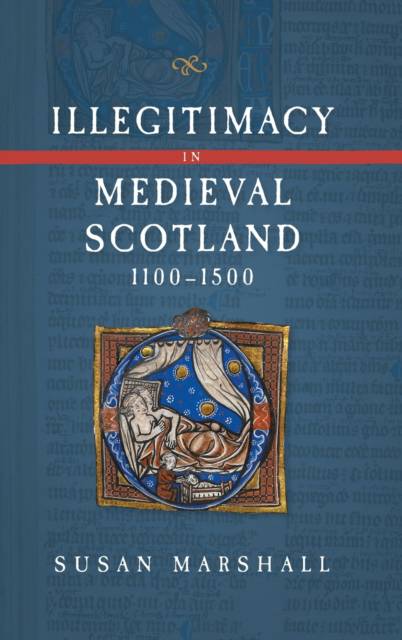
Illegitimacy in Medieval Scotland, 1100-1500
Susan Marshall
€ 177,45
+ 354 punten
Omschrijving
The question of illegitimacy was as important and complex in Scotland as elsewhere in the Middle Ages. This book examines its legal, political, and social implications there between the eleventh and fifteenth centuries. It explores illegitimacy in relation to royal succession and to the inheritance of ordinary estates; investigates the role it played in major political events; and considers how being, or having, a bastard affected the lives of elite women, and the careers of people in ecclesiastical life.
Scotland's earliest surviving legal treatise, Regiam Majestatem, denied inheritance rights to offspring legitimated by the intermarriage of their parents, while the law of the Church regarded such children as legitimate and, by implication, capable of inheritance. The volume scrutinises the tension between these two positions, alongside contemporary evidence which provides new insights into legal theory and practice concerning inheritance and birth status. By contextualising illegitimacy within its socio-political as well as legal settings, it challenges existing assumptions about the meaning and significance of bastardy in the Scottish middle ages.
SUSAN MARSHALL has worked as a Teaching Fellow in Celtic and Anglo-Saxon Studies at the University of Aberdeen; she is currently an independent historical researcher
Scotland's earliest surviving legal treatise, Regiam Majestatem, denied inheritance rights to offspring legitimated by the intermarriage of their parents, while the law of the Church regarded such children as legitimate and, by implication, capable of inheritance. The volume scrutinises the tension between these two positions, alongside contemporary evidence which provides new insights into legal theory and practice concerning inheritance and birth status. By contextualising illegitimacy within its socio-political as well as legal settings, it challenges existing assumptions about the meaning and significance of bastardy in the Scottish middle ages.
SUSAN MARSHALL has worked as a Teaching Fellow in Celtic and Anglo-Saxon Studies at the University of Aberdeen; she is currently an independent historical researcher
Specificaties
Betrokkenen
- Auteur(s):
- Uitgeverij:
Inhoud
- Aantal bladzijden:
- 264
- Taal:
- Engels
- Reeks:
- Reeksnummer:
- nr. 3
Eigenschappen
- Productcode (EAN):
- 9781783275885
- Verschijningsdatum:
- 21/05/2021
- Uitvoering:
- Hardcover
- Formaat:
- Genaaid
- Afmetingen:
- 156 mm x 234 mm
- Gewicht:
- 553 g


Alleen bij Standaard Boekhandel
+ 354 punten op je klantenkaart van Standaard Boekhandel
Cadeau

AANGERADEN


Beoordelingen
We publiceren alleen reviews die voldoen aan de voorwaarden voor reviews. Bekijk onze voorwaarden voor reviews.