


- Afhalen na 1 uur in een winkel met voorraad
- Gratis thuislevering in België vanaf € 30
- Ruim aanbod met 7 miljoen producten
- Afhalen na 1 uur in een winkel met voorraad
- Gratis thuislevering in België vanaf € 30
- Ruim aanbod met 7 miljoen producten





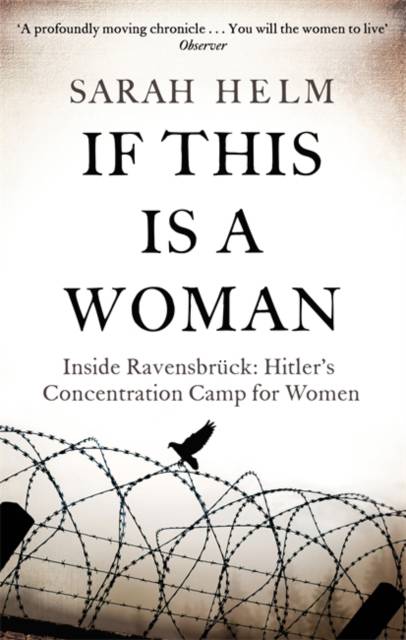
If This Is A Woman
Inside Ravensbruck: Hitler's Concentration Camp for Women
Sarah Helm
Paperback | Engels
€ 23,95
+ 47 punten
Uitvoering
Omschrijving
A masterful and moving account of the most horrific hidden atrocity of World War II: Ravensbruck, the only Nazi concentration camp built for women
On a sunny morning in May 1939 a phalanx of 867 women--housewives, doctors, opera singers, politicians, prostitutes--were marched through the woods fifty miles north of Berlin, driven on past a shining lake, then herded in through giant gates. Whipping and kicking them were scores of German women guards.
Their destination was Ravensbruck, a concentration camp designed specifically for women by Heinrich Himmler, prime architect of the Holocaust. By the end of the war, 130,000 women from more than twenty different European countries had been imprisoned there; among the prominent names were Genevieve de Gaulle, General de Gaulle's niece, and Gemma La Guardia Gluck, sister of the wartime mayor of New York.
Only a small number of these women were Jewish; Ravensbruck was largely a place for the Nazis to eliminate other inferior beings--social outcasts, Gypsies, political enemies, foreign resisters, the sick, the disabled, and the "mad." Over six years the prisoners endured beatings, torture, slave labor, starvation, and random execution. In the final months of war, Ravensbruck became an extermination camp, and by 1945, between 30,000 and 50,000 had been murdered.
For decades the story of Ravensbruck was hidden behind the Iron Curtain, and today it is still little known. Using testimony unearthed since the end of the Cold War and interviews with survivors who have never talked before, Sarah Helm has ventured into the heart of the camp, demonstrating for the reader in riveting detail how easily and quickly the unthinkable horror evolved.
Far more than a catalogue of atrocities, however, "Ravensbruck" is also a compelling account of what one survivor called "the heroism, superhuman tenacity, and exceptional willpower to survive." For every prisoner whose strength failed, another found the will to resist through acts of self-sacrifice and friendship as well as sabotage, protest, and escape.
While the core of this book is told from inside the camp, the story also sheds new light on the evolution of the wider genocide, the impotence of the world to respond, and Himmler's final attempt to seek a separate peace with the Allies using the women of Ravensbruck as a bargaining chip. Chilling, inspiring, and deeply unsettling, "Ravensbruck" is a groundbreaking work of historical investigation. With rare clarity, it reminds us of the capacity of mankind for both bestial cruelty and for courage against all odds.
On a sunny morning in May 1939 a phalanx of 867 women--housewives, doctors, opera singers, politicians, prostitutes--were marched through the woods fifty miles north of Berlin, driven on past a shining lake, then herded in through giant gates. Whipping and kicking them were scores of German women guards.
Their destination was Ravensbruck, a concentration camp designed specifically for women by Heinrich Himmler, prime architect of the Holocaust. By the end of the war, 130,000 women from more than twenty different European countries had been imprisoned there; among the prominent names were Genevieve de Gaulle, General de Gaulle's niece, and Gemma La Guardia Gluck, sister of the wartime mayor of New York.
Only a small number of these women were Jewish; Ravensbruck was largely a place for the Nazis to eliminate other inferior beings--social outcasts, Gypsies, political enemies, foreign resisters, the sick, the disabled, and the "mad." Over six years the prisoners endured beatings, torture, slave labor, starvation, and random execution. In the final months of war, Ravensbruck became an extermination camp, and by 1945, between 30,000 and 50,000 had been murdered.
For decades the story of Ravensbruck was hidden behind the Iron Curtain, and today it is still little known. Using testimony unearthed since the end of the Cold War and interviews with survivors who have never talked before, Sarah Helm has ventured into the heart of the camp, demonstrating for the reader in riveting detail how easily and quickly the unthinkable horror evolved.
Far more than a catalogue of atrocities, however, "Ravensbruck" is also a compelling account of what one survivor called "the heroism, superhuman tenacity, and exceptional willpower to survive." For every prisoner whose strength failed, another found the will to resist through acts of self-sacrifice and friendship as well as sabotage, protest, and escape.
While the core of this book is told from inside the camp, the story also sheds new light on the evolution of the wider genocide, the impotence of the world to respond, and Himmler's final attempt to seek a separate peace with the Allies using the women of Ravensbruck as a bargaining chip. Chilling, inspiring, and deeply unsettling, "Ravensbruck" is a groundbreaking work of historical investigation. With rare clarity, it reminds us of the capacity of mankind for both bestial cruelty and for courage against all odds.
Specificaties
Betrokkenen
- Auteur(s):
- Uitgeverij:
Inhoud
- Aantal bladzijden:
- 864
- Taal:
- Engels
Eigenschappen
- Productcode (EAN):
- 9780349120034
- Verschijningsdatum:
- 1/07/2016
- Uitvoering:
- Paperback
- Formaat:
- Trade paperback (VS)
- Afmetingen:
- 129 mm x 198 mm
- Gewicht:
- 830 g


Alleen bij Standaard Boekhandel
+ 47 punten op je klantenkaart van Standaard Boekhandel
Cadeau

AANGERADEN


Beoordelingen
We publiceren alleen reviews die voldoen aan de voorwaarden voor reviews. Bekijk onze voorwaarden voor reviews.