


- Afhalen na 1 uur in een winkel met voorraad
- Gratis thuislevering in België vanaf € 30
- Ruim aanbod met 7 miljoen producten
- Afhalen na 1 uur in een winkel met voorraad
- Gratis thuislevering in België vanaf € 30
- Ruim aanbod met 7 miljoen producten





Omschrijving
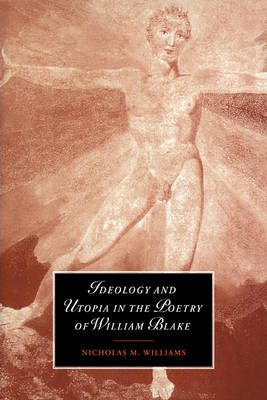
Scholars have often drawn attention to William Blake's unusual sensitivity to his social context. In this book, Nicholas Williams situates Blake's thought historically by showing how through the decades of a long and productive career, Blake consistently responded to the ideas, writing, and art of contemporaries. Williams presents detailed readings of several of Blake's major poems alongside Rousseau's Emile, Wollstonecraft's Vindication of the Rights of Women, Paine's Rights of Man, Burke's Reflections of the Revolution in France, and Robert Owen's Utopian experiments. In doing so, he offers revealing new insights into key Blake texts and draws attention to their inclusion of notions of social determinism, theories of ideology-critique and utopian traditions. Williams argues that if we are truly to understand ideology as it relates to Blake, we must understand the practical situation in which the ideological Blake found himself. His study is a revealing commentary on the work of one of our most challenging poets.
Specificaties
Betrokkenen
- Auteur(s):
- Uitgeverij:
Inhoud
- Aantal bladzijden:
- 272
- Taal:
- Engels
- Reeks:
- Reeksnummer:
- nr. 28
Eigenschappen
- Productcode (EAN):
- 9780521026840
- Verschijningsdatum:
- 2/11/2006
- Uitvoering:
- Paperback
- Formaat:
- Trade paperback (VS)
- Afmetingen:
- 152 mm x 229 mm
- Gewicht:
- 403 g


Alleen bij Standaard Boekhandel
+ 172 punten op je klantenkaart van Standaard Boekhandel
AANGERADEN


Beoordelingen
We publiceren alleen reviews die voldoen aan de voorwaarden voor reviews. Bekijk onze voorwaarden voor reviews.