


- Afhalen na 1 uur in een winkel met voorraad
- Gratis thuislevering in België vanaf € 30
- Ruim aanbod met 7 miljoen producten
- Afhalen na 1 uur in een winkel met voorraad
- Gratis thuislevering in België vanaf € 30
- Ruim aanbod met 7 miljoen producten





Omschrijving
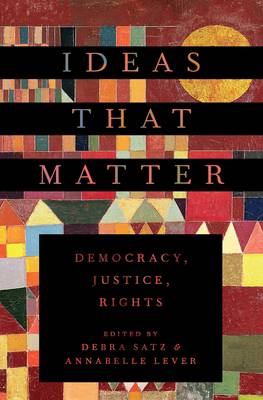
The essays in this volume take off from themes in the work of eminent philosopher and political scientist Joshua Cohen. Cohen is a deeply influential thinker who has written on deliberative democracy, freedom of expression, Rawlsian theory, global justice, and human rights. The essays gathered here both engage with Cohen's work and expand upon it, embodying his commitment to the idea that analytical work by philosophers and social scientists matters to our shared public life and to democracy itself. The contributors offer novel perspectives on pressing issues of public policy from accountability for sexual violence to exploitation in international trade.
The volume is organized around three central ideas. The first concerns democracy, specifically how we can improve collective decision-making both by elucidating our normative principles and enacting institutional changes. The second idea centers on how we confront injustice, investigating the role of emotions, social norms, and culture in democratic politics and public discussion. The final section explores how we develop political principles and values in an interdependent world, one in which theories of justice and forms of cooperation are increasingly extending beyond the state. The principle uniting this collection is that ideas matter-they can guide us in understanding how to confront difficult global problems such as the fragility of democratic institutions, the place of sovereignty in a globalizing world, and the persistence of racial injustice.
The volume is organized around three central ideas. The first concerns democracy, specifically how we can improve collective decision-making both by elucidating our normative principles and enacting institutional changes. The second idea centers on how we confront injustice, investigating the role of emotions, social norms, and culture in democratic politics and public discussion. The final section explores how we develop political principles and values in an interdependent world, one in which theories of justice and forms of cooperation are increasingly extending beyond the state. The principle uniting this collection is that ideas matter-they can guide us in understanding how to confront difficult global problems such as the fragility of democratic institutions, the place of sovereignty in a globalizing world, and the persistence of racial injustice.


Alleen bij Standaard Boekhandel
+ 402 punten op je klantenkaart van Standaard Boekhandel
CADEAU


Beoordelingen
We publiceren alleen reviews die voldoen aan de voorwaarden voor reviews. Bekijk onze voorwaarden voor reviews.