


- Afhalen na 1 uur in een winkel met voorraad
- Gratis thuislevering in België vanaf € 30
- Ruim aanbod met 7 miljoen producten
- Afhalen na 1 uur in een winkel met voorraad
- Gratis thuislevering in België vanaf € 30
- Ruim aanbod met 7 miljoen producten





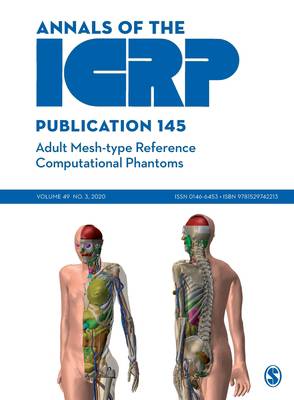
Omschrijving
Following the issuance of new radiological protection recommendations in Publication 103 (ICRP, 2007), the Commission released, in Publication 110 (ICRP, 2009), the adult male and female voxel-type reference computational phantoms to be used for the calculation of the reference dose coefficients for both external and internal exposures. While providing more anatomically realistic representations of internal anatomy than the older stylised phantoms, the voxel phantoms have their limitations, mainly due to voxel resolution, especially with respect to small tissue structures (e.g. lens of the eye) and very thin tissue layers (e.g. stem cell layers in the stomach wall mucosa and intestinal epithelium). This report describes the construction of the adult mesh-type reference computational phantoms (MRCPs) that are the modelling counterparts of the Publication 110 voxel-type reference computational phantoms. The MRCPs include all source and target regions needed for estimating effective dose, even the µm-thick target regions in the respiratory and alimentary tract, skin, and urinary bladder, assimilating the supplemental stylised models. The MRCPs can be directly implemented into Monte Carlo particle transport codes for dose calculations, i.e. without voxelisation, fully maintaining the advantages of the mesh geometry.
Specificaties
Betrokkenen
- Auteur(s):
- Uitgeverij:
Inhoud
- Aantal bladzijden:
- 204
- Taal:
- Engels
- Reeks:
Eigenschappen
- Productcode (EAN):
- 9781529742213
- Verschijningsdatum:
- 16/02/2021
- Uitvoering:
- Paperback
- Formaat:
- Trade paperback (VS)
- Afmetingen:
- 195 mm x 265 mm
- Gewicht:
- 553 g


Alleen bij Standaard Boekhandel
+ 854 punten op je klantenkaart van Standaard Boekhandel

Beoordelingen
We publiceren alleen reviews die voldoen aan de voorwaarden voor reviews. Bekijk onze voorwaarden voor reviews.