


- Afhalen na 1 uur in een winkel met voorraad
- Gratis thuislevering in België vanaf € 30
- Ruim aanbod met 7 miljoen producten
- Afhalen na 1 uur in een winkel met voorraad
- Gratis thuislevering in België vanaf € 30
- Ruim aanbod met 7 miljoen producten





€ 315,95
+ 631 punten
Omschrijving
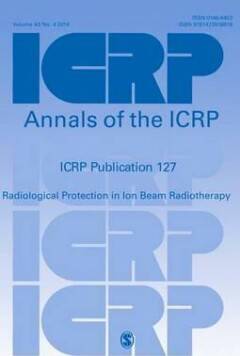
The goal of external beam radiotherapy is to provide precise dose localisation in the treatment volume of the target with minimal damage to the surrounding normal tissues. Ion beams, such as protons and carbon ions, provide excellent dose distributions due primarily to their finite range, allowing a significant reduction of undesired exposure to normal tissues. Careful treatment planning is required for the given type and localisation of the tumour to be treated in order to maximise the treatment efficiency and minimise the dose to the normal tissues. Radiation exposure in the out-of-field volumes arises from secondary neutrons and photons, particle fragments, and photons from activated materials. These unavoidable doses should be considered from the standpoint of radiological protection of the patient. Radiological protection of medical staff at ion beam therapy facilities requires special attention. Appropriate management and control are required for the therapy equipment and also for the air in the treatment room which can be activated by the particle beam and its secondaries. Radiological protection and safety management should always be in conformity with regulatory requirements. The current regulations for occupational exposures in photon radiotherapy are applicable to ion beam radiotherapy with protons or carbon ions. Ion beam radiotherapy requires, however, a more complex treatment system than conventional radiotherapy, and appropriate training of the staff and suitable quality assurance programme are recommended to avoid possible accidental exposure to the patient, to minimise unnecessary doses to normal tissues and to minimise radiation exposure of staff.
Specificaties
Betrokkenen
- Auteur(s):
- Uitgeverij:
Inhoud
- Aantal bladzijden:
- 116
- Taal:
- Engels
- Reeks:
Eigenschappen
- Productcode (EAN):
- 9781473918818
- Verschijningsdatum:
- 17/02/2015
- Uitvoering:
- Paperback
- Formaat:
- Trade paperback (VS)
- Afmetingen:
- 170 mm x 244 mm
- Gewicht:
- 195 g


Alleen bij Standaard Boekhandel
+ 631 punten op je klantenkaart van Standaard Boekhandel

Beoordelingen
We publiceren alleen reviews die voldoen aan de voorwaarden voor reviews. Bekijk onze voorwaarden voor reviews.