


- Afhalen na 1 uur in een winkel met voorraad
- Gratis thuislevering in België vanaf € 30
- Ruim aanbod met 7 miljoen producten
- Afhalen na 1 uur in een winkel met voorraad
- Gratis thuislevering in België vanaf € 30
- Ruim aanbod met 7 miljoen producten





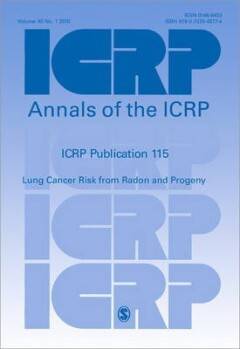
Omschrijving
Recent epidemiological studies of the association between lung cancer and exposure to radon and its decay products are reviewed. Particular emphasis is given to pooled case-control studies of residential exposures and to cohorts of underground miners exposed to relatively low levels of radon. The residential and miner epidemiological studies provide consistent estimates of lung cancer risk with statistically significant associations observed at average annual concentrations of about 200 Bq m-3 and cumulative occupational levels of about 50 WLM, respectively. Based on recent results from combined analyses of epidemiological studies of miners, a lifetime excess absolute risk of 5 × 10⁻⁴ per WLM (14 × 10-5 per mJ h m-3) should now be used as the nominal probability coefficient for radon and radon progeny induced lung cancer, replacing the previous ICRP Publication 65 value of 2.8 × 10⁻⁴ per WLM (8 × 10⁻⁵ per mJ h m-3). Current knowledge of radon associated risks for organs other than the lungs does not justify the selection of a detriment coefficient different from the fatality coefficient for radon-induced lung cancer.
Specificaties
Betrokkenen
- Auteur(s):
- Uitgeverij:
Inhoud
- Aantal bladzijden:
- 66
- Taal:
- Engels
- Reeks:
Eigenschappen
- Productcode (EAN):
- 9780702049774
- Verschijningsdatum:
- 11/05/2012
- Uitvoering:
- Paperback
- Formaat:
- Trade paperback (VS)
- Afmetingen:
- 174 mm x 240 mm
- Gewicht:
- 122 g


Alleen bij Standaard Boekhandel
+ 406 punten op je klantenkaart van Standaard Boekhandel

Beoordelingen
We publiceren alleen reviews die voldoen aan de voorwaarden voor reviews. Bekijk onze voorwaarden voor reviews.