


- Afhalen na 1 uur in een winkel met voorraad
- Gratis thuislevering in België vanaf € 30
- Ruim aanbod met 7 miljoen producten
- Afhalen na 1 uur in een winkel met voorraad
- Gratis thuislevering in België vanaf € 30
- Ruim aanbod met 7 miljoen producten





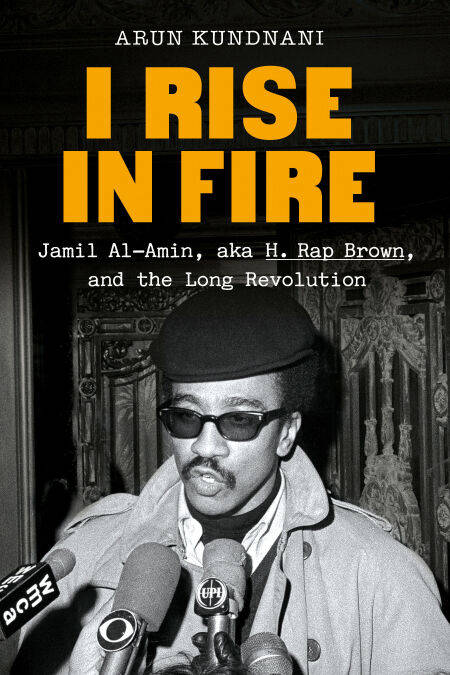
I Rise in Fire E-BOOK
Jamil Al-Amin, aka H. Rap Brown, and the Long Revolution
Arun Kundnani
E-book | Engels
€ 17,34
+ 17 punten
Uitvoering
Omschrijving
A rigorous account of the pivotal but little-studied civil rights leader Jamil Al-Amin, aka H. Rap Brown, stitches together new and profound connections. I Rise in Fire is a gripping, necessary addition to literature on revolutionary politics.
In a just world, the name of the late H. Rap Brown would be as well-known today as those of Martin Luther King jr., Malcolm X, John Lewis, Stokely Carmichael, Huey Newton, and Fred Hampton. The fact that it isn’t, is no accident, but evidence of the perverse reality of America's strained relationship to revolutionary thinkers and the rebellion’s they helped to inspire. Those who can’t be co-opted and sanitized, or weren’t executed, must be erased from our collective conscience. Arun Kundnani, attempts to remedy this tragic disappearing, by resurfacing the life of the former-SNCC chairman, committed activist, and political agitator who would change his name to Jamil Al-Amin while in prison.
H. Rap Brown represented a distinctly new, and steadily growing segment of the SNCC coalition, blue-collar blacks. His aim was to spread SNCC's message of revolution beyond its base on college campuses, in the hopes of reaching the vast majority of Black-Americans, most of whom had never attended college. While he reveled in the limelight that came along with his position, he eschewed the ivory tower and academia, instead recommitting himself to grassroots activism.
H Rap Brown’s is not the usual, reassuring story of a Black leader reminding America of its core values and helping the system to reform itself. There is no arc of the moral universe bending toward justice for Brown. Instead, his life forces us to conclude that progress has been elusive for the Black poor; that racial justice demands a deeper, longer, and harder struggle than what the conventional civil rights story implies; and that the revolutionary politics of the 1960s did not fade into irrelevance but endured in subterranean ways and then re-emerged with the upsurge of protest in the last decade. Individual revolutionaries can be vanquished and forgotten but the spirit they embody lives on.
In a just world, the name of the late H. Rap Brown would be as well-known today as those of Martin Luther King jr., Malcolm X, John Lewis, Stokely Carmichael, Huey Newton, and Fred Hampton. The fact that it isn’t, is no accident, but evidence of the perverse reality of America's strained relationship to revolutionary thinkers and the rebellion’s they helped to inspire. Those who can’t be co-opted and sanitized, or weren’t executed, must be erased from our collective conscience. Arun Kundnani, attempts to remedy this tragic disappearing, by resurfacing the life of the former-SNCC chairman, committed activist, and political agitator who would change his name to Jamil Al-Amin while in prison.
H. Rap Brown represented a distinctly new, and steadily growing segment of the SNCC coalition, blue-collar blacks. His aim was to spread SNCC's message of revolution beyond its base on college campuses, in the hopes of reaching the vast majority of Black-Americans, most of whom had never attended college. While he reveled in the limelight that came along with his position, he eschewed the ivory tower and academia, instead recommitting himself to grassroots activism.
H Rap Brown’s is not the usual, reassuring story of a Black leader reminding America of its core values and helping the system to reform itself. There is no arc of the moral universe bending toward justice for Brown. Instead, his life forces us to conclude that progress has been elusive for the Black poor; that racial justice demands a deeper, longer, and harder struggle than what the conventional civil rights story implies; and that the revolutionary politics of the 1960s did not fade into irrelevance but endured in subterranean ways and then re-emerged with the upsurge of protest in the last decade. Individual revolutionaries can be vanquished and forgotten but the spirit they embody lives on.
Specificaties
Betrokkenen
- Auteur(s):
- Uitgeverij:
Inhoud
- Aantal bladzijden:
- 352
- Taal:
- Engels
Eigenschappen
- Productcode (EAN):
- 9780385551403
- Verschijningsdatum:
- 22/03/2027
- Uitvoering:
- E-book
- Beveiligd met:
- Adobe DRM
- Formaat:
- ePub


Alleen bij Standaard Boekhandel
+ 17 punten op je klantenkaart van Standaard Boekhandel
CADEAU

AANGERADEN


Beoordelingen
We publiceren alleen reviews die voldoen aan de voorwaarden voor reviews. Bekijk onze voorwaarden voor reviews.