



Je cadeautjes zeker op tijd in huis hebben voor de feestdagen? Kom langs in onze winkels en vind het perfecte geschenk!
- Afhalen na 1 uur in een winkel met voorraad
- Gratis thuislevering in België vanaf € 30
- Ruim aanbod met 7 miljoen producten
Je cadeautjes zeker op tijd in huis hebben voor de feestdagen? Kom langs in onze winkels en vind het perfecte geschenk!
- Afhalen na 1 uur in een winkel met voorraad
- Gratis thuislevering in België vanaf € 30
- Ruim aanbod met 7 miljoen producten





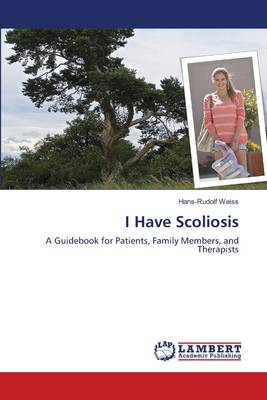
I Have Scoliosis
A Guidebook for Patients, Family Members, and Therapists 11th Edition
Hans-Rudolf Weiss
Paperback | Engels
€ 26,95
+ 53 punten
Omschrijving
Increasingly, evidence can be found for the use of physiotherapeutic treatment for scoliosis. Bracing, once controversial, is now regarded as having a scientific basis. In contrast, evidence is lacking for the surgical treatment of scoliosis and recent studies on long-term results raise questions. The future, therefore, belongs to the conservative, nonsurgical treatment of scoliosis. The good news is that the latest developments in bracing and practices aimed at helping the patient according to individual curve pattern, now offer improved chances of stopping curvature progression and even the potential to reduce curvatures in the 20° to 50° range. Therapy specific to scoliosis aims for results acceptable for everyday living and to minimize its effects on the afflicted. After a short time and without major theoretical training, patients can learn a sense of postural awareness and help themselves by learning to avoid curvature-stimulating behavior.
Specificaties
Betrokkenen
- Auteur(s):
- Uitgeverij:
Inhoud
- Aantal bladzijden:
- 164
- Taal:
- Engels
Eigenschappen
- Productcode (EAN):
- 9783659495410
- Verschijningsdatum:
- 17/12/2013
- Uitvoering:
- Paperback
- Formaat:
- Trade paperback (VS)
- Afmetingen:
- 152 mm x 229 mm
- Gewicht:
- 249 g


Alleen bij Standaard Boekhandel
+ 53 punten op je klantenkaart van Standaard Boekhandel
CADEAU


Beoordelingen
We publiceren alleen reviews die voldoen aan de voorwaarden voor reviews. Bekijk onze voorwaarden voor reviews.