

- Afhalen na 1 uur in een winkel met voorraad
- Gratis thuislevering in België vanaf € 30
- Ruim aanbod met 7 miljoen producten
- Afhalen na 1 uur in een winkel met voorraad
- Gratis thuislevering in België vanaf € 30
- Ruim aanbod met 7 miljoen producten





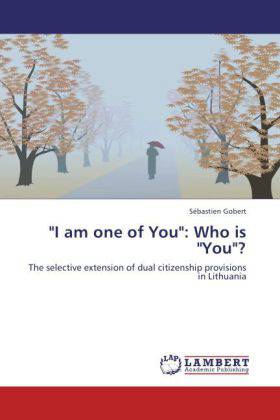
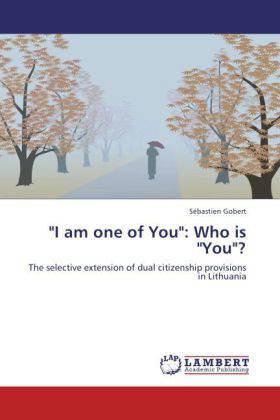
"I am one of You": Who is "You"?
The selective extension of dual citizenship provisions in Lithuania
Sébastien Gobert
Paperback | Engels
€ 76,45
+ 152 punten
Omschrijving
Because of historical upheavals and economic turmoil, about one-fourth of the Lithuanian ethno-nation is scattered across the world. Such a dispersion has played a significant role in the reshaping of an independent citizenry after Lithuania recovered independence in 1990. After the 1989 adoption of a so-called zero-option citizenship law, that is the granting of citizenship to all permanent residents on the territory, further legal developments of the citizenship framework, namely in terms of dual citizenship, have marked a certain selective "re-ethnicization of membership", to use Christian Joppke s expression. In this respect, the (re)definition of an ethno-national feeling of belonging disconnected from residency has proved crucially central. The political treatment of the question has been denounced as confusing and inconsistent and has been at the core of a long-lasting political and legal controversy. Issues of post-communist transition, minority protection, diaspora politics and diplomatic relations have been at stake in redefining a national citizenry in Lithuania. The implications of such a political process bear lessons for the future of European integration.
Specificaties
Betrokkenen
- Auteur(s):
- Uitgeverij:
Inhoud
- Aantal bladzijden:
- 124
- Taal:
- Engels
Eigenschappen
- Productcode (EAN):
- 9783847374589
- Verschijningsdatum:
- 3/02/2012
- Uitvoering:
- Paperback
- Afmetingen:
- 152 mm x 229 mm
- Gewicht:
- 191 g


Alleen bij Standaard Boekhandel
+ 152 punten op je klantenkaart van Standaard Boekhandel

Beoordelingen
We publiceren alleen reviews die voldoen aan de voorwaarden voor reviews. Bekijk onze voorwaarden voor reviews.