


- Afhalen na 1 uur in een winkel met voorraad
- Gratis thuislevering in België vanaf € 30
- Ruim aanbod met 7 miljoen producten
- Afhalen na 1 uur in een winkel met voorraad
- Gratis thuislevering in België vanaf € 30
- Ruim aanbod met 7 miljoen producten





Omschrijving
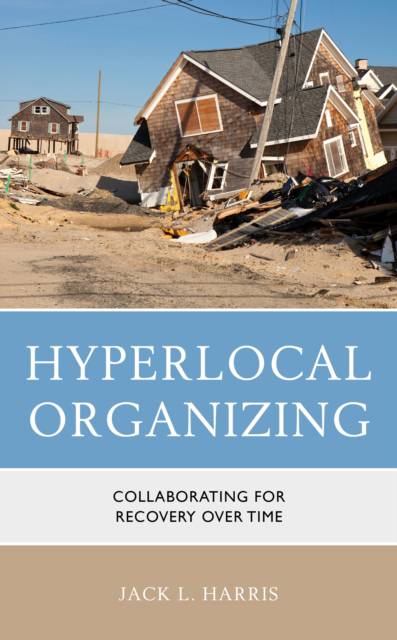
Hyperlocal Organizing: Collaborating for Recovery Over Time explores the difficult work of post-disaster recovery. Jack L. Harris, demonstrates that after disaster, broad interorganizational landscapes are needed to unite the grassroots, neighborhoods, communities, and institutions to solve problems of recovery and bring people home. Yet all too often, government disaster policy and institutions ignore the critical role of local knowledge and organizing. Exploring the organizational landscape of the mid-Atlantic United States after Hurricane Sandy, Harris reveals how participation and collaboration open multiple pathways to recovery after disaster by building resilience and democratizing governance. Using powerful theories of communicating and organizing, this book develops a new framework--hyperlocal organizing--to address the challenge of community survivability in the twenty-first century. Achieving community survivability requires robust organizational partnerships and interorganizational collaboration to solve collective problems. The lessons Harris presents are important not just for post-disaster recovery, but for addressing grand challenges such as climate change, environmental justice, and equitable community development. Scholars of environmental communication, disaster studies, and emergency management, will find this book of particular interest.
Specificaties
Betrokkenen
- Auteur(s):
- Uitgeverij:
Inhoud
- Aantal bladzijden:
- 172
- Taal:
- Engels
- Reeks:
Eigenschappen
- Productcode (EAN):
- 9781666927238
- Verschijningsdatum:
- 21/10/2022
- Uitvoering:
- Hardcover
- Formaat:
- Genaaid
- Afmetingen:
- 152 mm x 229 mm
- Gewicht:
- 426 g


Alleen bij Standaard Boekhandel
+ 373 punten op je klantenkaart van Standaard Boekhandel
AANGERADEN


Beoordelingen
We publiceren alleen reviews die voldoen aan de voorwaarden voor reviews. Bekijk onze voorwaarden voor reviews.