


- Afhalen na 1 uur in een winkel met voorraad
- Gratis thuislevering in België vanaf € 30
- Ruim aanbod met 7 miljoen producten
- Afhalen na 1 uur in een winkel met voorraad
- Gratis thuislevering in België vanaf € 30
- Ruim aanbod met 7 miljoen producten





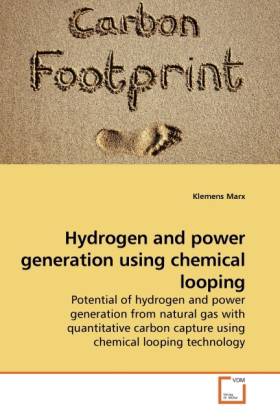
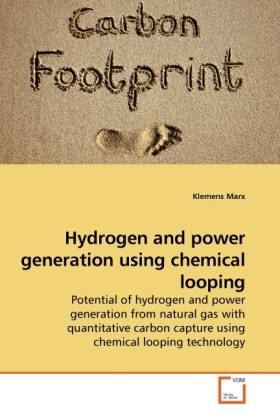
Hydrogen and power generation using chemical looping
Potential of hydrogen and power generation from natural gas with quantitative carbon capture using chemical looping technology
Klemens Marx
Paperback | Engels
€ 58,45
+ 116 punten
Omschrijving
Carbon capture and storage (CCS) from carbon fueled processes seems to be the key mid-term strategy to limit the carbon dioxide concentration in the atmosphere. Chemical looping is proposed as a combustion technology (CLC) with inherent CO2 separation and as a hydrogen production process using reforming (CLR). The potential of chemical looping technology is the low energy penalty for CO2 capture. This study focuses on the implementation of chemical looping into a power-, and a hydrogen production process in the scale of 10 MW fuel power. The aim is to show achievable efficiencies and optimization potentials of such systems in order to allow the evaluation of the competitiveness of chemical looping technology.
Specificaties
Betrokkenen
- Auteur(s):
- Uitgeverij:
Inhoud
- Aantal bladzijden:
- 136
- Taal:
- Engels
Eigenschappen
- Productcode (EAN):
- 9783639159301
- Verschijningsdatum:
- 19/04/2010
- Uitvoering:
- Paperback
- Afmetingen:
- 150 mm x 220 mm
- Gewicht:
- 197 g


Alleen bij Standaard Boekhandel
+ 116 punten op je klantenkaart van Standaard Boekhandel
Cadeau

AANGERADEN


Beoordelingen
We publiceren alleen reviews die voldoen aan de voorwaarden voor reviews. Bekijk onze voorwaarden voor reviews.