


- Afhalen na 1 uur in een winkel met voorraad
- Gratis thuislevering in België vanaf € 30
- Ruim aanbod met 7 miljoen producten
- Afhalen na 1 uur in een winkel met voorraad
- Gratis thuislevering in België vanaf € 30
- Ruim aanbod met 7 miljoen producten





Omschrijving
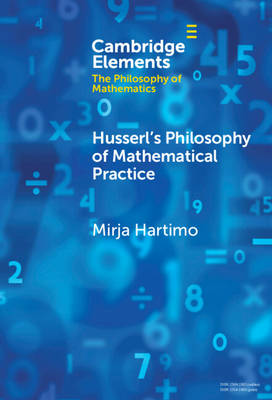
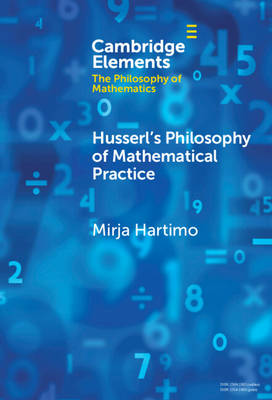
Husserl's Philosophy of Mathematical Practice explores the applicability of the phenomenological method to philosophy of mathematical practice. The first section elaborates on Husserl's own understanding of the method of radical sense-investigation (Besinnung), with which he thought the mathematics of his time should be approached. The second section shows how Husserl himself practiced it, tracking both constructive and platonistic features in mathematical practice. Finally, the third section situates Husserlian phenomenology within the contemporary philosophy of mathematical practice, where the examined styles are more diverse. Husserl's phenomenology is presented as a method, not a fixed doctrine, applicable to study and unify philosophy of mathematical practice and the metaphysics implied in it. In so doing, this Element develops Husserl's philosophy of mathematical practice as a species of Kantian critical philosophy and asks after the conditions of possibility of social and self-critical mathematical practices. This title is also available as open access on Cambridge Core.
Specificaties
Betrokkenen
- Auteur(s):
- Uitgeverij:
Inhoud
- Aantal bladzijden:
- 74
- Taal:
- Engels
- Reeks:
Eigenschappen
- Productcode (EAN):
- 9781009517072
- Verschijningsdatum:
- 16/01/2025
- Uitvoering:
- Hardcover
- Formaat:
- Genaaid
- Afmetingen:
- 152 mm x 229 mm
- Gewicht:
- 272 g


Alleen bij Standaard Boekhandel
+ 248 punten op je klantenkaart van Standaard Boekhandel
CADEAU

AANGERADEN


Beoordelingen
We publiceren alleen reviews die voldoen aan de voorwaarden voor reviews. Bekijk onze voorwaarden voor reviews.