


- Afhalen na 1 uur in een winkel met voorraad
- Gratis thuislevering in België vanaf € 30
- Ruim aanbod met 7 miljoen producten
- Afhalen na 1 uur in een winkel met voorraad
- Gratis thuislevering in België vanaf € 30
- Ruim aanbod met 7 miljoen producten





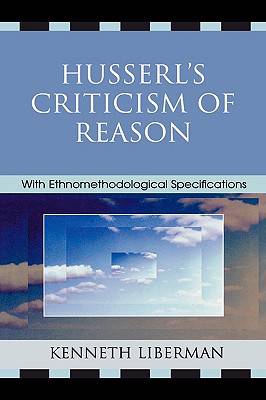
Husserl's Criticism of Reason
With Ethnomethodological Specifications
Kenneth B Liberman
Hardcover | Engels
€ 220,45
+ 440 punten
Omschrijving
Husserl's Criticism of Reason, With Ethnomethodological Specifications marshals some of the central ideas of phenomenology for use in empirical studies of naturally occurring ordinary interaction. At the same time, Liberman outlines ways that concrete ethnomethodological studies of philosophical thinking and philosophers' work can extend Edmund Husserl's criticism of reasoning by providing specificities that Husserl never furnished. Liberman develops and applies such phenomenological ideas as the limits of apophantic reasoning and logocentrism, the benefits of aporias and negative dialectics, and theLebenswelt origins of meaning. For phenomenologists, he offers clear summaries of the most vital notions that ethnomethodologists use to locate and describe the implicit intricacies of the thinking philosophical practitioners who are actively and collaboratively engaged in formal reflections. Liberman not only engages in a dialogue and debate with the major thinkers of the phenomenological and post-phenomenological tradition, including Husserl, Heidegger, Levinas, Merleau-Ponty, and Derrida, he poses some ethnomethodological challenges to contemporary phenomenological thought. These notions are not only developed theoretically, but also illustrated practically with abundant demonstrations and detailed analyses.Husserl's Criticism of Reason is situated within a philosophical anthropological vision of how human beings have been learning how to use the tools of formal analytic reasoning to serve their thinking without suffocating it.
Specificaties
Betrokkenen
- Auteur(s):
- Uitgeverij:
Inhoud
- Aantal bladzijden:
- 212
- Taal:
- Engels
Eigenschappen
- Productcode (EAN):
- 9780739111185
- Verschijningsdatum:
- 1/09/2007
- Uitvoering:
- Hardcover
- Formaat:
- Genaaid
- Afmetingen:
- 161 mm x 229 mm
- Gewicht:
- 439 g


Alleen bij Standaard Boekhandel
+ 440 punten op je klantenkaart van Standaard Boekhandel
Cadeau

AANGERADEN


Beoordelingen
We publiceren alleen reviews die voldoen aan de voorwaarden voor reviews. Bekijk onze voorwaarden voor reviews.