


- Afhalen na 1 uur in een winkel met voorraad
- Gratis thuislevering in België vanaf € 30
- Ruim aanbod met 7 miljoen producten
- Afhalen na 1 uur in een winkel met voorraad
- Gratis thuislevering in België vanaf € 30
- Ruim aanbod met 7 miljoen producten





€ 24,00
+ 48 punten
Uitvoering
Eenvoudig bestellen
Veilig betalen


Gratis thuislevering vanaf € 30 (via bpost)
Gratis levering in je Standaard Boekhandel
Omschrijving
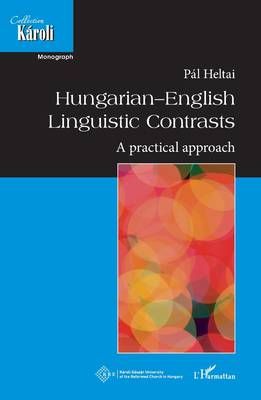
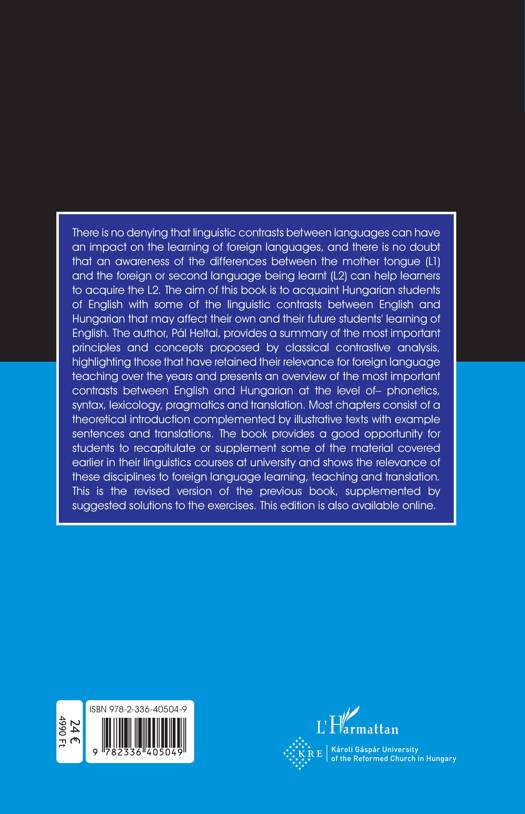
There is no denying that linguistic contrasts between languages can have an impact on the learning of foreign languages, and there is no doubt that an awareness of the differences between the mother tongue (L1) and the foreign or second language being learnt (L2) can help learners to acquire the L2. The aim of this book is to acquaint Hungarian students of English with some of the linguistic contrasts between English and Hungarian that may affect their own and their future students' learning of English. The author, Pál Heltai, provides a summary of the most important principles and concepts proposed by classical contrastive analysis, highlighting those that have retained their relevance for foreign language teaching over the years and presents an overview of the most important contrasts between English and Hungarian at the level of- phonetics, syntax, lexicology, pragmatics and translation. Most chapters consist of a theoretical introduction complemented by illustrative texts with example sentences and translations. The book provides a good opportunity for students to recapitulate or supplement some of the material covered earlier in their linguistics courses at university and shows the relevance of these disciplines to foreign language learning, teaching and translation. This is the revised version of the previous book, supplemented by suggested solutions to the exercises. This edition is also available online.
Specificaties
Betrokkenen
- Auteur(s):
- Uitgeverij:
Inhoud
- Aantal bladzijden:
- 286
- Taal:
- Engels
- Reeks:
- Geïllustreerd:
- Ja
Eigenschappen
- Productcode (EAN):
- 9782336405049
- Verschijningsdatum:
- 21/03/2024
- Uitvoering:
- Paperback
- Formaat:
- Trade paperback (VS)
- Afmetingen:
- 153 mm x 235 mm
- Gewicht:
- 399 g


Alleen bij Standaard Boekhandel
+ 48 punten op je klantenkaart van Standaard Boekhandel
CADEAU

AANGERADEN


Beoordelingen
We publiceren alleen reviews die voldoen aan de voorwaarden voor reviews. Bekijk onze voorwaarden voor reviews.