


- Afhalen na 1 uur in een winkel met voorraad
- Gratis thuislevering in België vanaf € 30
- Ruim aanbod met 7 miljoen producten
- Afhalen na 1 uur in een winkel met voorraad
- Gratis thuislevering in België vanaf € 30
- Ruim aanbod met 7 miljoen producten





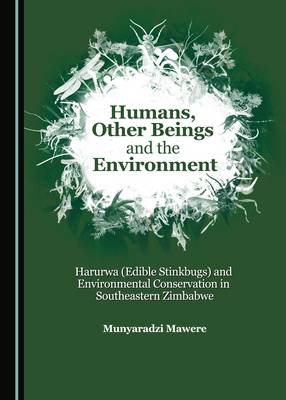
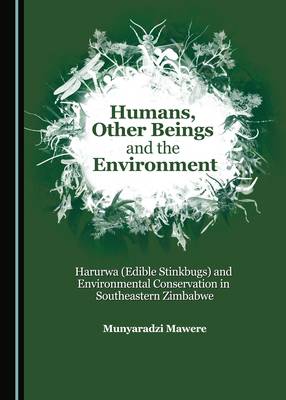
Humans, Other Beings and the Environment
Harurwa (Edible Stinkbugs) and Environmental Conservation in Southeastern Zimbabwe
Munyaradzi Mawere
Hardcover | Engels
€ 70,95
+ 141 punten
Eenvoudig bestellen
Veilig betalen


Gratis thuislevering vanaf € 30 (via bpost)
Gratis levering in je Standaard Boekhandel
Omschrijving
Humans, Other Beings and the Environment is an ethnographic study of the possibilities for the mutual, symbiotic co-existence of human beings, a unique species of forest insects and natural forests. The result of extensive fieldwork conducted over a period of thirteen months, the book highlights the continuum among humans, wild insects and environmental conservation outcomes in a specific environment of southeastern Norumedzo in rural Zimbabwe. In this respect, it describes interactions and relationships between humans, other beings and the natural forests to demonstrate how some aspects of the emerging body of literature in the posthumanities and relational ontologies can work to grasp the collaborative interactional space for different social actors in the cosmos, through which cognitive and knowledge communities can be extended. Furthermore, the book raises critical questions for conservation sciences, political ecology and environmental anthropology, as it demonstrates the extent of relevance and application of the Norumedzo conservation case study, with particular regard to conservational problems and asymmetrical relations between humans and other beings in other scenarios in Zimbabwe and beyond. Complicating many assumptions about knowledge production, nature and culture, the book offers independent and critical insights into the interpretation of modernist science, posthumanist ideas and indigenous epistemologies, and relates these to existing studies. As such, it will be of interest not only to anthropologists, but also to political scientists, environmentalists and policy makers in Zimbabwe, southern Africa and beyond.
Specificaties
Betrokkenen
- Auteur(s):
- Uitgeverij:
Inhoud
- Aantal bladzijden:
- 235
- Taal:
- Engels
Eigenschappen
- Productcode (EAN):
- 9781443882675
- Verschijningsdatum:
- 19/10/2015
- Uitvoering:
- Hardcover
- Formaat:
- Genaaid
- Afmetingen:
- 152 mm x 203 mm
- Gewicht:
- 299 g


Alleen bij Standaard Boekhandel
+ 141 punten op je klantenkaart van Standaard Boekhandel
CADEAU

AANGERADEN


Beoordelingen
We publiceren alleen reviews die voldoen aan de voorwaarden voor reviews. Bekijk onze voorwaarden voor reviews.