


- Afhalen na 1 uur in een winkel met voorraad
- Gratis thuislevering in België vanaf € 30
- Ruim aanbod met 7 miljoen producten
- Afhalen na 1 uur in een winkel met voorraad
- Gratis thuislevering in België vanaf € 30
- Ruim aanbod met 7 miljoen producten





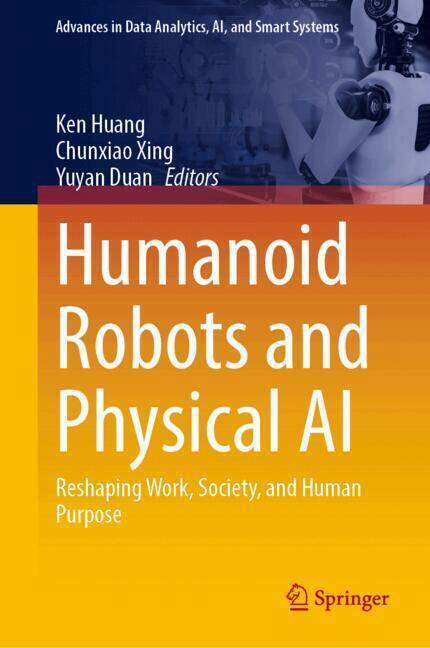
Humanoid Robots and Physical AI
Reshaping Work, Society, and Human Purpose
€ 81,45
+ 162 punten
Eenvoudig bestellen
Veilig betalen


Gratis thuislevering vanaf € 30 (via bpost)
Gratis levering in je Standaard Boekhandel
Omschrijving
This book analyzes the convergence of humanoid robotics and agentic AI, providing the first comprehensive, interdisciplinary examination of how physical embodiment and autonomous intelligence are transforming robotics from research prototypes into practical systems reshaping industries worldwide. It addresses the critical gap in understanding how hardware innovations, AI breakthroughs, economic forces, and societal considerations intersect in the development and deployment of humanoid robots. The scope spans ten engaging chapters covering: hardware and embodiment technologies (actuators, power systems, locomotion); perception and interaction systems (computer vision, sensor fusion, multimodal processing); agentic AI architectures (foundation models, reinforcement learning, planning systems); integration and control (real-time systems, simulation, sim-to-real transfer); safety, security, and reliability (physical safety standards, cybersecurity, adversarial robustness); economic transformation and labor markets (cost analysis, productivity gains, business models); governance, ethics, and philosophy (regulatory frameworks, liability, consciousness debates); psychology and human-robot coexistence (trust, emotional bonding, societal adaptation); and decentralized systems and future convergence (blockchain integration, robot economies, 2030-2050 scenarios). Among the compelling themes addressed are the USA-China technology race in humanoid development, with detailed case studies of Boston Dynamics, Tesla Optimus, Figure AI, Agility Robotics, Apptronik, Unitree, UBTECH, Xiaomi, Fourier Intelligence, and EX Robots. The book examines how different design philosophies, cost structures, and regulatory environments shape humanoid development trajectories.
The book raises critical questions about the future of work, human dignity in automation, robot rights and consciousness, geopolitical competition in robotics, and the convergence of physical and digital intelligence. It provides frameworks for understanding these questions through technical depth, ethical analysis, and practical deployment considerations. As such, the book is intended for robotics and AI researchers, engineers, and graduate students in related fields who seek advanced insights into humanoid development and applications.
Specificaties
Betrokkenen
- Uitgeverij:
Inhoud
- Taal:
- Engels
- Reeks:
Eigenschappen
- Productcode (EAN):
- 9783032336682
- Verschijningsdatum:
- 10/10/2026
- Uitvoering:
- Hardcover
- Afmetingen:
- 155 mm x 235 mm

Alleen bij Standaard Boekhandel
+ 162 punten op je klantenkaart van Standaard Boekhandel
CADEAU

AANGERADEN


Beoordelingen
We publiceren alleen reviews die voldoen aan de voorwaarden voor reviews. Bekijk onze voorwaarden voor reviews.