


- Afhalen na 1 uur in een winkel met voorraad
- Gratis thuislevering in België vanaf € 30
- Ruim aanbod met 7 miljoen producten
- Afhalen na 1 uur in een winkel met voorraad
- Gratis thuislevering in België vanaf € 30
- Ruim aanbod met 7 miljoen producten





€ 254,45
+ 508 punten
Omschrijving
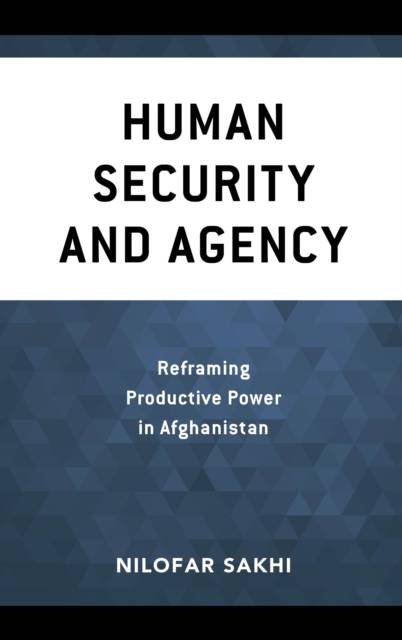
Human Security and Agency investigates how human security manifests itself in the context of Afghanistan and explores the factors that promote and impede its development. To that end, Nilofar Sakhi examines whether the development of productive power is an effective approach to human security implementation in a country that has experienced numerous development programs, which were designed and implemented to build communities and protect their security. The objective of this book is to move beyond a simple exploration of the causal relationship between human security, structures, and agency and investigate the factors that either promote or impede the implementation of human security. It employs multiple methods of systematic inquiry and engages literature on the socioeconomic and political context in Afghanistan to understand the factors that influence the agency of production, creativity, and control that individuals possess. The combination of well-grounded empirical work and theoretical insights makes this book an invaluable introduction to the study of human security.
Specificaties
Betrokkenen
- Auteur(s):
- Uitgeverij:
Inhoud
- Aantal bladzijden:
- 160
- Taal:
- Engels
- Reeks:
Eigenschappen
- Productcode (EAN):
- 9781786614544
- Verschijningsdatum:
- 14/10/2020
- Uitvoering:
- Hardcover
- Formaat:
- Genaaid
- Afmetingen:
- 152 mm x 229 mm
- Gewicht:
- 385 g


Alleen bij Standaard Boekhandel
+ 508 punten op je klantenkaart van Standaard Boekhandel
Cadeau

AANGERADEN


Beoordelingen
We publiceren alleen reviews die voldoen aan de voorwaarden voor reviews. Bekijk onze voorwaarden voor reviews.