


- Afhalen na 1 uur in een winkel met voorraad
- Gratis thuislevering in België vanaf € 30
- Ruim aanbod met 7 miljoen producten
- Afhalen na 1 uur in een winkel met voorraad
- Gratis thuislevering in België vanaf € 30
- Ruim aanbod met 7 miljoen producten





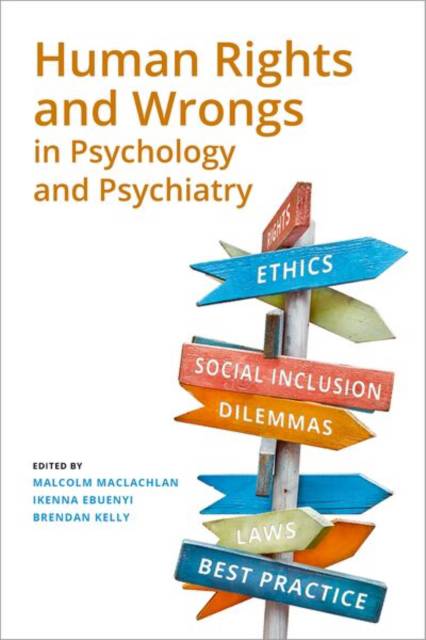
Human Rights and Wrongs in Psychology and Psychiatry
Malcolm MacLachlan, Brendan Kelly, Ikenna Ebuenyi
Paperback | Engels
€ 91,95
+ 183 punten
Omschrijving
What do you do when there is no right answer?
Often working in mental health, disability, broader health and social care fields, professionals are required to make complex decisions, where right course of action is not very clear. There are moments when personal values, professional ethics, national and international laws, and organisational policies collide and raise conflicts. In such moments, professionals are required to make difficult decisions while weaving through individual needs and institutional expectations as well as broader societal values.
Human Rights and Wrong in Psychology and Psychiatry offers a unique approach to ethical decision-making - not through rigid rules or abstract ethical theories, but rather by presenting interdisciplinary and global perspectives. It urges practitioners to study how circumstances and positionality influence their perception of right and wrong.
At the heart of the book is a practical, flexible framework for reflective practice. Readers are encouraged to examine how their own values, cultural backgrounds, and professional roles shape their responses to difficult situations. In doing so, the book fosters deeper ethical awareness and equips practitioners to respond with greater confidence, empathy, and integrity in complex care environments.
With contributions from leading practitioners from across the world and from a range of professions, the book invites you to think through with them some profoundly difficult dilemmas. An essential resource for students, trainees, and experienced professionals alike, it prepares you to make better decisions in the future, by understanding the factors that influence you and how you respond to them.
Often working in mental health, disability, broader health and social care fields, professionals are required to make complex decisions, where right course of action is not very clear. There are moments when personal values, professional ethics, national and international laws, and organisational policies collide and raise conflicts. In such moments, professionals are required to make difficult decisions while weaving through individual needs and institutional expectations as well as broader societal values.
Human Rights and Wrong in Psychology and Psychiatry offers a unique approach to ethical decision-making - not through rigid rules or abstract ethical theories, but rather by presenting interdisciplinary and global perspectives. It urges practitioners to study how circumstances and positionality influence their perception of right and wrong.
At the heart of the book is a practical, flexible framework for reflective practice. Readers are encouraged to examine how their own values, cultural backgrounds, and professional roles shape their responses to difficult situations. In doing so, the book fosters deeper ethical awareness and equips practitioners to respond with greater confidence, empathy, and integrity in complex care environments.
With contributions from leading practitioners from across the world and from a range of professions, the book invites you to think through with them some profoundly difficult dilemmas. An essential resource for students, trainees, and experienced professionals alike, it prepares you to make better decisions in the future, by understanding the factors that influence you and how you respond to them.
Specificaties
Betrokkenen
- Auteur(s):
- Uitgeverij:
Inhoud
- Aantal bladzijden:
- 368
- Taal:
- Engels
Eigenschappen
- Productcode (EAN):
- 9780198891574
- Verschijningsdatum:
- 26/06/2026
- Uitvoering:
- Paperback
- Formaat:
- Trade paperback (VS)
- Afmetingen:
- 156 mm x 234 mm


Alleen bij Standaard Boekhandel
+ 183 punten op je klantenkaart van Standaard Boekhandel

Beoordelingen
We publiceren alleen reviews die voldoen aan de voorwaarden voor reviews. Bekijk onze voorwaarden voor reviews.