


- Afhalen na 1 uur in een winkel met voorraad
- Gratis thuislevering in België vanaf € 30
- Ruim aanbod met 7 miljoen producten
- Afhalen na 1 uur in een winkel met voorraad
- Gratis thuislevering in België vanaf € 30
- Ruim aanbod met 7 miljoen producten





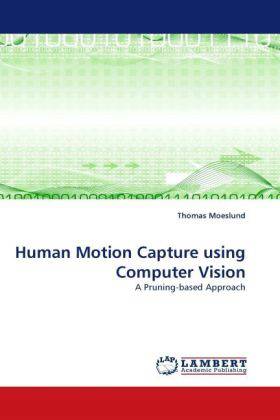
Human Motion Capture using Computer Vision
A Pruning-based Approach
Thomas B. Moeslund
Paperback | Engels
€ 77,95
+ 155 punten
Omschrijving
We live in a visual world where our main input comes through our eyes. Building systems that can replicate (or even outperform!) peoples ability to analyze visual information is the goal of the Computer Vision research field. One of the major focal points within this field is to automatically be able to capture human motion: Human Motion Capture. This rapidly growing research field has inspired this book. The book starts out by providing an overview of the different motion capture technologies and their potential applications. A special focus is here devoted to computer vision-based approaches. The rest of the book hereafter goes in-depth with a particular model-based approach known as Analysis-by-Synthesis and shows how the complexity of the problem can be made tractable by incorporating the human kinematics. Concretely the book illustrates how spatially-based pruning can be applied to constrain the state-space representation of the human s upper body. The book is aimed at both researchers who seek insides into concrete methods for human pose estimation, as well as students who want and introduction to the exiting field of computer vision-based human motion capture.
Specificaties
Betrokkenen
- Auteur(s):
- Uitgeverij:
Inhoud
- Aantal bladzijden:
- 280
- Taal:
- Engels
Eigenschappen
- Productcode (EAN):
- 9783838367002
- Verschijningsdatum:
- 8/06/2010
- Uitvoering:
- Paperback
- Afmetingen:
- 152 mm x 229 mm
- Gewicht:
- 413 g


Alleen bij Standaard Boekhandel
+ 155 punten op je klantenkaart van Standaard Boekhandel
Cadeau

AANGERADEN


Beoordelingen
We publiceren alleen reviews die voldoen aan de voorwaarden voor reviews. Bekijk onze voorwaarden voor reviews.