


- Afhalen na 1 uur in een winkel met voorraad
- Gratis thuislevering in België vanaf € 30
- Ruim aanbod met 7 miljoen producten
- Afhalen na 1 uur in een winkel met voorraad
- Gratis thuislevering in België vanaf € 30
- Ruim aanbod met 7 miljoen producten





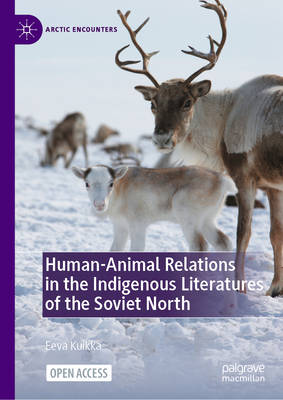
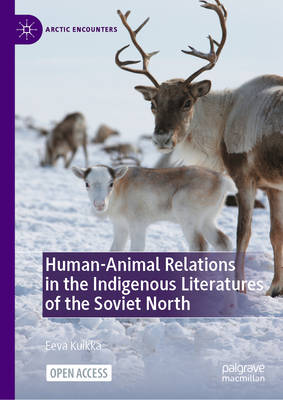
Human-Animal Relations in the Indigenous Literatures of the Soviet North
Eeva Kuikka
€ 54,45
+ 108 punten
Omschrijving
This open access book examines how Indigenous authors from the Soviet North reflect the impact of Soviet settler colonialism on Indigenous communities in the region through literary engagement with human-animal relations. Careful analyses of works by Iurii Rytkheu (Chukchi), Anna Nerkagi (Nenets), and Eremei Aipin (Khanty) address the authors' responses to Soviet colonialism and forced assimilation, as well as the ways in which these processes altered Indigenous cultures and conceptualizations of nature and non-human animals. The book situates Indigenous authors and their texts within the cultural, political, and ideological context of the Soviet Union, while simultaneously drawing on a broad array of theoretical frameworks - posthumanism, new materialism, and postcolonial criticism - to guide its analysis. The wealth of theoretical perspectives makes the book of interest to scholars and students in Soviet literary studies, Russian and Eurasian studies, Indigenous studies, environmental humanities, human-animal studies, and Arctic Studies. In the wake of Russia's full-scale invasion of Ukraine and the emerged call to decolonize Russian and Eurasian studies, Human-Animal Relations in the Indigenous Literatures of the Soviet North offers a timely and necessary re-evaluation of Russia's colonial history in the Arctic region.
Specificaties
Betrokkenen
- Auteur(s):
- Uitgeverij:
Inhoud
- Aantal bladzijden:
- 219
- Taal:
- Engels
- Reeks:
Eigenschappen
- Productcode (EAN):
- 9783032084149
- Verschijningsdatum:
- 3/01/2026
- Uitvoering:
- Hardcover
- Formaat:
- Genaaid
- Afmetingen:
- 161 mm x 218 mm
- Gewicht:
- 435 g


Alleen bij Standaard Boekhandel
+ 108 punten op je klantenkaart van Standaard Boekhandel
Cadeau

AANGERADEN


Beoordelingen
We publiceren alleen reviews die voldoen aan de voorwaarden voor reviews. Bekijk onze voorwaarden voor reviews.