



Bedankt voor het vertrouwen het afgelopen jaar! Om jou te bedanken bieden we GRATIS verzending (in België) aan op alles gedurende de hele maand januari.
- Afhalen na 1 uur in een winkel met voorraad
- In januari gratis thuislevering in België
- Ruim aanbod met 7 miljoen producten
Bedankt voor het vertrouwen het afgelopen jaar! Om jou te bedanken bieden we GRATIS verzending (in België) aan op alles gedurende de hele maand januari.
- Afhalen na 1 uur in een winkel met voorraad
- In januari gratis thuislevering in België
- Ruim aanbod met 7 miljoen producten





€ 70,45
+ 140 punten
Uitvoering
Omschrijving
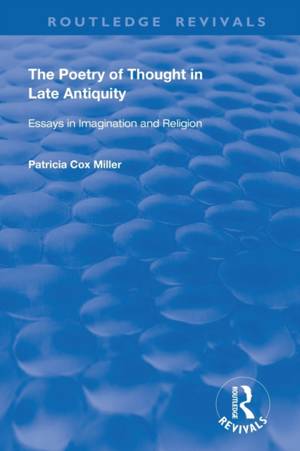
This title was first published in 2001. These collected essays by Patricia Cox Miller identify new possibilities of meaning in the study of religion in late antiquity. The book addresses the topic of the imaginative mindset of late ancient authors from a variety of Greco-Roman religious traditions. Attending to the play of language, as well as to the late ancient sensitivity to image, metaphor, and paradox, Cox Miller's work highlights the poetizing sensibility that marked many of the texts of this period and draws on methods of interpretation from a variety of contemporary literary-critical theories. This book will appeal to scholars of late antiquity, religious literature, and literary critical theory more widely, illustrating how fruitful dialogue across the centuries can be - not only in eliciting aspects of late ancient texts that have gone unnoticed but also in showing that many 'modern' ideas, such as Roland Barthes', were actually already alive and well in ancient texts.
Specificaties
Betrokkenen
- Auteur(s):
- Uitgeverij:
Inhoud
- Aantal bladzijden:
- 298
- Taal:
- Engels
- Reeks:
Eigenschappen
- Productcode (EAN):
- 9781138711952
- Verschijningsdatum:
- 16/10/2020
- Uitvoering:
- Paperback
- Formaat:
- Trade paperback (VS)
- Afmetingen:
- 152 mm x 234 mm
- Gewicht:
- 385 g


Alleen bij Standaard Boekhandel
+ 140 punten op je klantenkaart van Standaard Boekhandel
SOLDEN


Beoordelingen
We publiceren alleen reviews die voldoen aan de voorwaarden voor reviews. Bekijk onze voorwaarden voor reviews.