


- Afhalen na 1 uur in een winkel met voorraad
- Gratis thuislevering in België vanaf € 30
- Ruim aanbod met 7 miljoen producten
- Afhalen na 1 uur in een winkel met voorraad
- Gratis thuislevering in België vanaf € 30
- Ruim aanbod met 7 miljoen producten





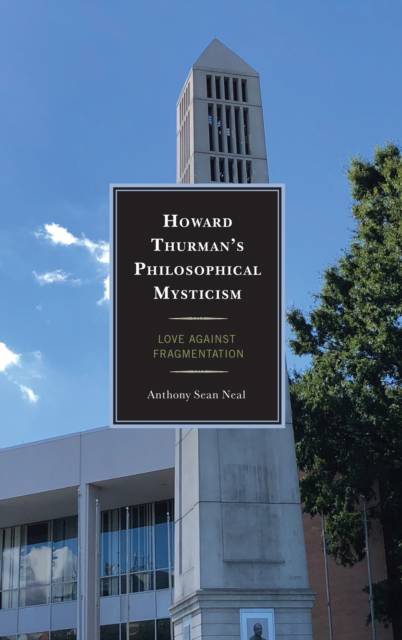
Howard Thurman's Philosophical Mysticism
Love Against Fragmentation
Anthony Sean Neal
Hardcover | Engels
€ 186,95
+ 373 punten
Omschrijving
African American Philosophy and African American Philosophers have played a central role in understanding and also shaping what it means to be black in America. Some of their conclusions were reactions to the mistreatment they received from the majority population, but other of their conclusions were extensions and/or novel positions taken with a view through past perceptual lenses. Yet, with the mass exodus of black students from HBCU's after the civil rights era, many of the important figures and their inquiries have been little or poorly studied. The significance of this work is found in its attempt to grapple with one such seminal figure, his memory of his ancestors, and the education he received from Morehouse College (in the Atlanta University Center), all of which formed the roots of the ideas he later produced. Howard Thurman, former Dean of Marsh Chapel at Boston University, and mentor to figures such as Martin Luther King, Jr., left quite a large ideological footprint; however, just as others of his milieu, his ideas have been largely overlooked. Thurman's deep-rooted knowledge of black culture, particularly black religious ideas as they existed during the period of African enslavement in the United States and as they were exhibited in the Negro Spirituals, shaped his thinking and allowed him to produce a body of work grounded in the musings and traditions of his ancestors. This volume investigates, forms an analysis, and even critiques Thurman's work such that others can benefit from the profundity of his thoughts while also taking note of their relevance for today's philosophers concerned with humanity.
Specificaties
Betrokkenen
- Auteur(s):
- Uitgeverij:
Inhoud
- Aantal bladzijden:
- 132
- Taal:
- Engels
Eigenschappen
- Productcode (EAN):
- 9781498552752
- Verschijningsdatum:
- 2/01/2019
- Uitvoering:
- Hardcover
- Formaat:
- Genaaid
- Afmetingen:
- 155 mm x 231 mm
- Gewicht:
- 340 g


Alleen bij Standaard Boekhandel
+ 373 punten op je klantenkaart van Standaard Boekhandel
AANGERADEN


Beoordelingen
We publiceren alleen reviews die voldoen aan de voorwaarden voor reviews. Bekijk onze voorwaarden voor reviews.