


- Afhalen na 1 uur in een winkel met voorraad
- Gratis thuislevering in België vanaf € 30
- Ruim aanbod met 7 miljoen producten
- Afhalen na 1 uur in een winkel met voorraad
- Gratis thuislevering in België vanaf € 30
- Ruim aanbod met 7 miljoen producten





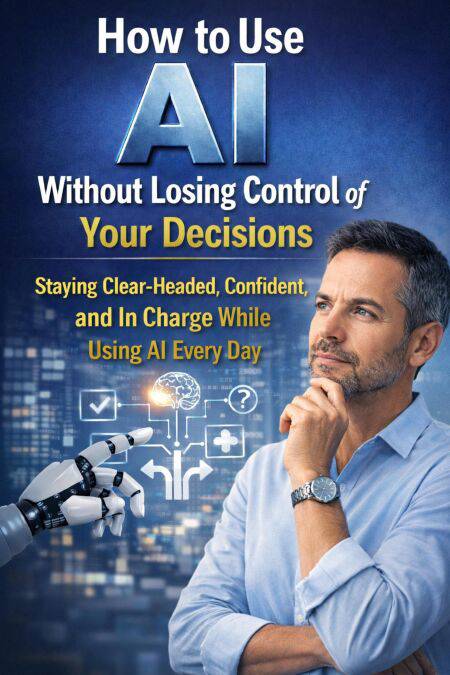
How to Use AI Without Losing Control of Your Decisions: Staying Clear-Headed, Confident, and In Charge While Using AI Every Day E-BOOK
Taylor Brooks
E-book | Engels
€ 4,49
+ 4 punten
Omschrijving
Artificial intelligence is now part of everyday decision-making. People use it to think through problems, plan next steps, compare options, and make sense of complex information. While this can save time and reduce effort, many users notice an unexpected side effect. Decisions can start to feel less clear, confidence can quietly fade, and overthinking can increase rather than disappear. This book explores that experience in a grounded, practical way.
How to Use AI Without Losing Control of Your Decisions is written for everyday users who want help with AI decision-making but do not want to hand over responsibility for their thinking. It focuses on common patterns such as relying on AI too quickly, feeling mentally overloaded by multiple AI responses, or struggling to tell whether a choice still feels like one's own. These issues are especially common among beginners searching for how to use AI responsibly, using AI as a thinking tool, or thinking clearly with AI.
The book explains why AI can sometimes increase confusion instead of clarity. Its speed, confidence, and polished language can make it easy to defer judgment, especially when decisions already feel uncertain. Readers learn how AI overthinking develops, how AI mental overload builds gradually, and why many people begin to question their instincts after extended use. These shifts are subtle, which makes them difficult to notice or correct without guidance.
Rather than discouraging AI use, the book shows how to restore balance. Through practical examples and simple frameworks, readers learn how to keep human judgment and AI working together instead of in competition. The focus is on staying in control with AI, not rejecting it. Step-by-step approaches demonstrate how to slow down decisions, clarify what matters personally, and use AI responses as input rather than instructions.
Readers are guided through everyday scenarios related to work, learning, planning, and problem-solving. These examples show how small adjustments can support AI and critical thinking, reduce dependence, and improve AI trust and accuracy without adding complexity. Reflection prompts help readers notice when AI is helping versus when it is quietly replacing independent thought.
Inside the book, readers will explore:
Why using AI without losing control requires awareness, not technical skill How to recognize early signs of AI dependence and decision fatigue Simple checks to support AI judgment skills without second-guessing Practical habits for everyday AI decision making Ways to reduce confusion while making better decisions with AIThe tone remains calm and non-clinical throughout. There are no promises of perfect outcomes or guarantees of certainty. Instead, the emphasis is on skill building, understanding, and realistic use. Readers are encouraged to remain engaged in their thinking while still benefiting from AI's strengths.
This book is especially helpful for those searching for AI clarity for beginners, avoid overreliance on AI, or practical AI use for everyday life. It offers a steady, realistic path to using AI as support while keeping confidence, judgment, and decision-making firmly in human hands.
Specificaties
Betrokkenen
- Auteur(s):
- Uitgeverij:
Inhoud
- Taal:
- Engels
Eigenschappen
- Productcode (EAN):
- 9798233591570
- Verschijningsdatum:
- 29/12/2025
- Uitvoering:
- E-book
- Formaat:
- ePub


Alleen bij Standaard Boekhandel
+ 4 punten op je klantenkaart van Standaard Boekhandel

Beoordelingen
We publiceren alleen reviews die voldoen aan de voorwaarden voor reviews. Bekijk onze voorwaarden voor reviews.