


- Afhalen na 1 uur in een winkel met voorraad
- Gratis thuislevering in België vanaf € 30
- Ruim aanbod met 7 miljoen producten
- Afhalen na 1 uur in een winkel met voorraad
- Gratis thuislevering in België vanaf € 30
- Ruim aanbod met 7 miljoen producten





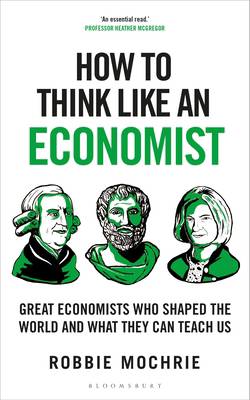
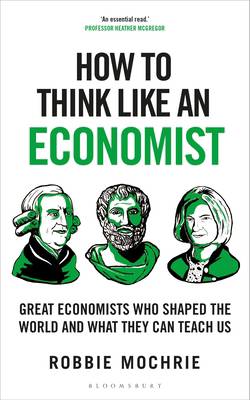
How to Think Like an Economist
Great Economists Who Shaped the World and What They Can Teach Us
Robbie Mochrie
€ 22,95
+ 45 punten
Uitvoering
Omschrijving
An entertaining collection of biographical portraits of history's most influential and inspiring economists - from Aristotle to Keynes, and Karl Marx to Friedrich Hayek - and what they can teach us about the world today.
We all live in the economy, whether we know it or not. The current cost-of-living crisis is an economic problem. Brexit might be a political project, but it has already changed how much money we have to spend and which products we can buy. Climate change may seem to be an ecological, or a social, or a technological problem, but it is also an economic problem, because its solution will transform the structure of the global economy.
This book provides a readable and entertaining guide to the great thinkers who help us understand how economics works. It looks at how Aristotle invented the household budget, why Adam Smith wanted to abolish rent, and how modern Nobel prize winners shape the world around us. From the Greeks and Romans to the thinkers behind Enron and the financial crash of 2008, this is the ultimate guide to the greatest economists of the human age, and what their extraordinary thinking can teach us about how to see the world.
Mochrie explores how the largely Western, White and male dominated field of economics is beginning to diversify, and shows how the great ideas of complex economics can be applied to our day-to-day existence.
We all live in the economy, whether we know it or not. The current cost-of-living crisis is an economic problem. Brexit might be a political project, but it has already changed how much money we have to spend and which products we can buy. Climate change may seem to be an ecological, or a social, or a technological problem, but it is also an economic problem, because its solution will transform the structure of the global economy.
This book provides a readable and entertaining guide to the great thinkers who help us understand how economics works. It looks at how Aristotle invented the household budget, why Adam Smith wanted to abolish rent, and how modern Nobel prize winners shape the world around us. From the Greeks and Romans to the thinkers behind Enron and the financial crash of 2008, this is the ultimate guide to the greatest economists of the human age, and what their extraordinary thinking can teach us about how to see the world.
Mochrie explores how the largely Western, White and male dominated field of economics is beginning to diversify, and shows how the great ideas of complex economics can be applied to our day-to-day existence.
Specificaties
Betrokkenen
- Auteur(s):
- Uitgeverij:
Inhoud
- Aantal bladzijden:
- 288
- Taal:
- Engels
- Reeks:
Eigenschappen
- Productcode (EAN):
- 9781399408622
- Verschijningsdatum:
- 9/05/2024
- Uitvoering:
- Paperback
- Afmetingen:
- 135 mm x 215 mm
- Gewicht:
- 294 g


Alleen bij Standaard Boekhandel
+ 45 punten op je klantenkaart van Standaard Boekhandel
Cadeau

AANGERADEN


Beoordelingen
We publiceren alleen reviews die voldoen aan de voorwaarden voor reviews. Bekijk onze voorwaarden voor reviews.