


- Afhalen na 1 uur in een winkel met voorraad
- Gratis thuislevering in België vanaf € 30
- Ruim aanbod met 7 miljoen producten
- Afhalen na 1 uur in een winkel met voorraad
- Gratis thuislevering in België vanaf € 30
- Ruim aanbod met 7 miljoen producten





Omschrijving
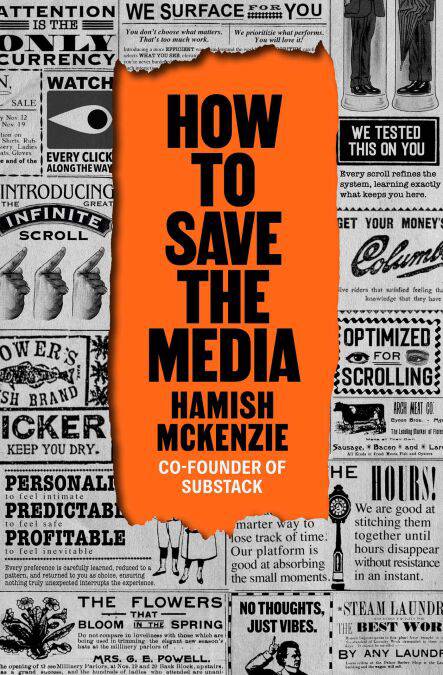
A clear-eyed examination of why modern media lost public trust—and what it will take to earn it back.
Trust in journalism is collapsing. Social platforms reward outrage over truth. Algorithms, advertisers, and billionaires shape what we see, think, and share. Now artificial intelligence is unleashing a flood of cheap content, raising an urgent question: what kind of media can still earn public confidence?
In How to Save the Media, journalist and Substack cofounder Hamish McKenzie traces, from inside the industry’s transformation, how journalism reached this breaking point—and what the current moment reveals about what comes next.
Blending cultural history, political economy, reportage, and first-person insight, McKenzie explores the collapse of the advertising-driven media model and the emergence of new ways of organizing journalism around direct relationships between writers and readers. Through vivid stories of legendary journalists, independent writers, local reporters, and new media pioneers, he shows how power is shifting away from institutions and platforms—and back toward individuals and communities who can own their work, their audiences, and their values.
This is not a tactical “creator playbook.” It is a big-idea book about journalism, democracy, and civic life in the age of AI. McKenzie argues that media is not just content, but civic infrastructure: the system societies rely on to think together, argue productively, and decide what is credible. Rebuilding it requires rethinking incentives, ownership, and responsibility in a media environment shaped by automation and scale.
Clear-eyed but ultimately hopeful, How to Save the Media argues that today’s chaos is not the end of serious journalism, but a turbulent transition—one in which the choices made by journalists, institutions, and readers alike will shape what comes next.
Trust in journalism is collapsing. Social platforms reward outrage over truth. Algorithms, advertisers, and billionaires shape what we see, think, and share. Now artificial intelligence is unleashing a flood of cheap content, raising an urgent question: what kind of media can still earn public confidence?
In How to Save the Media, journalist and Substack cofounder Hamish McKenzie traces, from inside the industry’s transformation, how journalism reached this breaking point—and what the current moment reveals about what comes next.
Blending cultural history, political economy, reportage, and first-person insight, McKenzie explores the collapse of the advertising-driven media model and the emergence of new ways of organizing journalism around direct relationships between writers and readers. Through vivid stories of legendary journalists, independent writers, local reporters, and new media pioneers, he shows how power is shifting away from institutions and platforms—and back toward individuals and communities who can own their work, their audiences, and their values.
This is not a tactical “creator playbook.” It is a big-idea book about journalism, democracy, and civic life in the age of AI. McKenzie argues that media is not just content, but civic infrastructure: the system societies rely on to think together, argue productively, and decide what is credible. Rebuilding it requires rethinking incentives, ownership, and responsibility in a media environment shaped by automation and scale.
Clear-eyed but ultimately hopeful, How to Save the Media argues that today’s chaos is not the end of serious journalism, but a turbulent transition—one in which the choices made by journalists, institutions, and readers alike will shape what comes next.
Specificaties
Betrokkenen
- Auteur(s):
- Uitgeverij:
Inhoud
- Aantal bladzijden:
- 128
- Taal:
- Engels
Eigenschappen
- Productcode (EAN):
- 9798893312058
- Verschijningsdatum:
- 16/11/2026
- Uitvoering:
- E-book
- Beveiligd met:
- Adobe DRM
- Formaat:
- ePub


Alleen bij Standaard Boekhandel
+ 17 punten op je klantenkaart van Standaard Boekhandel
CADEAU

AANGERADEN


Beoordelingen
We publiceren alleen reviews die voldoen aan de voorwaarden voor reviews. Bekijk onze voorwaarden voor reviews.