


- Afhalen na 1 uur in een winkel met voorraad
- Gratis thuislevering in België vanaf € 30
- Ruim aanbod met 7 miljoen producten
- Afhalen na 1 uur in een winkel met voorraad
- Gratis thuislevering in België vanaf € 30
- Ruim aanbod met 7 miljoen producten





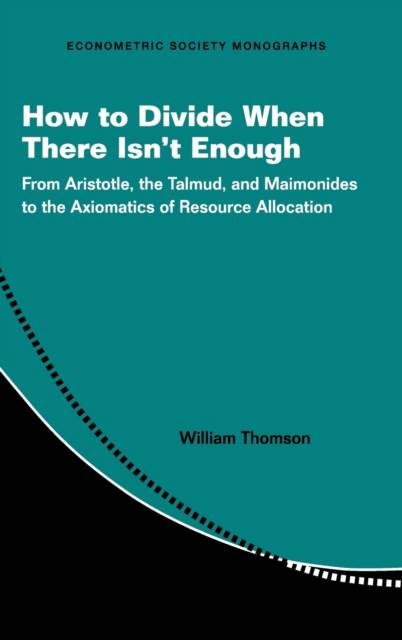
How to Divide When There Isn't Enough
From Aristotle, the Talmud, and Maimonides to the Axiomatics of Resource Allocation
William Thomson
€ 255,45
Omschrijving
How to Divide When There Isn't Enough develops a rigorous yet accessible presentation of the state-of-the-art for the adjudication of conflicting claims and the theory of taxation. It covers all aspects one may wish to know about claims problems: the most important rules, the most important axioms, and how these two sets are related. More generally, it also serves as an introduction to the modern theory of economic design, which in the last twenty years has revolutionized many areas of economics, generating a wide range of applicable allocations rules that have improved people's lives in many ways. In developing the theory, the book employs a variety of techniques that will appeal to both experts and non-experts. Compiling decades of research into a single framework, William Thomson provides numerous applications that will open a large number of avenues for future research.
Specificaties
Betrokkenen
- Auteur(s):
- Uitgeverij:
Inhoud
- Aantal bladzijden:
- 504
- Taal:
- Engels
- Reeks:
- Reeksnummer:
- nr. 62
Eigenschappen
- Productcode (EAN):
- 9781107194625
- Verschijningsdatum:
- 5/09/2019
- Uitvoering:
- Hardcover
- Formaat:
- Genaaid
- Afmetingen:
- 166 mm x 235 mm
- Gewicht:
- 816 g


Alleen bij Standaard Boekhandel
Cadeau

AANGERADEN


Beoordelingen
We publiceren alleen reviews die voldoen aan de voorwaarden voor reviews. Bekijk onze voorwaarden voor reviews.