


- Afhalen na 1 uur in een winkel met voorraad
- Gratis thuislevering in België vanaf € 30
- Ruim aanbod met 7 miljoen producten
- Afhalen na 1 uur in een winkel met voorraad
- Gratis thuislevering in België vanaf € 30
- Ruim aanbod met 7 miljoen producten





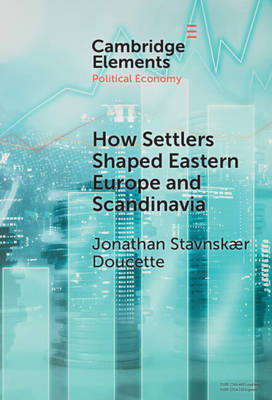
How Settlers Shaped Eastern Europe and Scandinavia
Economic Development, Regime Change, and State Formation, 800-1800
Jonathan Stavnskær Doucette
€ 74,45
+ 148 punten
Uitvoering
Omschrijving
This Element argues that settlers from Western Europe shaped European state formation and transformed the political and economic fate of Eastern Europe and Scandinavia between 800 and 1800. While existing work on European colonization focuses on overseas settlers, and studies of Europe's development tend to concentrate on the continent's western regions, the Element highlights a significant internal wave of settlement from Western to Eastern and Northern Europe. Beginning around 1100 and tapering off after 1400, this settler movement spurred economic development and the spread of local self-government across Eastern Europe and Scandinavia. Settlers also provided institutional templates that local rulers adapted in their efforts to build states. These rulers were increasingly compelled to bargain with politically autonomous and large cities. Over time, the emergence of new states in Eastern Europe intensified geopolitical competition across the continent.
Specificaties
Betrokkenen
- Auteur(s):
- Uitgeverij:
Inhoud
- Aantal bladzijden:
- 75
- Taal:
- Engels
- Reeks:
Eigenschappen
- Productcode (EAN):
- 9781009546676
- Verschijningsdatum:
- 31/05/2026
- Uitvoering:
- Hardcover
- Formaat:
- Genaaid


Alleen bij Standaard Boekhandel
+ 148 punten op je klantenkaart van Standaard Boekhandel
Cadeau

AANGERADEN


Beoordelingen
We publiceren alleen reviews die voldoen aan de voorwaarden voor reviews. Bekijk onze voorwaarden voor reviews.