


- Afhalen na 1 uur in een winkel met voorraad
- Gratis thuislevering in België vanaf € 30
- Ruim aanbod met 7 miljoen producten
- Afhalen na 1 uur in een winkel met voorraad
- Gratis thuislevering in België vanaf € 30
- Ruim aanbod met 7 miljoen producten





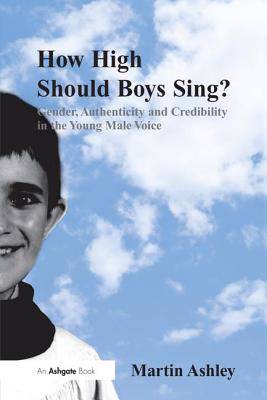
How High Should Boys Sing?
Gender, Authenticity and Credibility in the Young Male Voice. by Martin Ashley
Martin Ashley
Paperback | Engels
€ 112,95
+ 225 punten
Uitvoering
Omschrijving
'A boy sings...a beautiful thing' (www.boychoirs.org), but is it? What kinds of boy, singing what kinds of music and to whom? Martin Ashley presents a unique consideration of boys' singing that shows the high voice to be historically, culturally and physiologically more problematic even than is commonly assumed. Through Ashley's extensive conversations with young performers and analysis of their reception by 'peer audiences', the research reveals that the common supposition that 'boys don't want to sound like girls' is far from adequate in explaining the 'missing males' syndrome that can perplex choir directors. The book intertwines the study of singing with the study of identity to create a rich resource for musicians, scholars, teachers and all those concerned with young male involvement in music through singing. The conclusions of the book will challenge many attitudes and unconsidered positions through its argument that many boys actually want to sing but are discouraged by a failure of the adult world to understand the boy mind. Ashley intends the book to stand as an indictment of much complacency and myopia with regard to the young male voice. A substantial grant from the Arts and Humanities Research Council has enabled the production of a multi-media resource for schools, choirs and youth organizations called Boys Keep Singing. Based on the contents of this book, the resource shows how, once the interest of boys is captured in primary schools, their singing can be sustained and developed through the difficult but vital early secondary years of ages 11 - 14, about which this book says so much. The resource is lavishly illustrated by short films of boys singing, supported by interviews with boys and their teachers, and a wealth of of animated diagrams and cartoons. It is available to schools and organizations involved in musical education through registration at www.boys-keep-singing.com.
Specificaties
Betrokkenen
- Auteur(s):
- Uitgeverij:
Inhoud
- Aantal bladzijden:
- 194
- Taal:
- Engels
Eigenschappen
- Productcode (EAN):
- 9781138252639
- Verschijningsdatum:
- 9/09/2016
- Uitvoering:
- Paperback
- Formaat:
- Trade paperback (VS)
- Afmetingen:
- 156 mm x 234 mm
- Gewicht:
- 281 g


Alleen bij Standaard Boekhandel
+ 225 punten op je klantenkaart van Standaard Boekhandel
Cadeau

AANGERADEN


Beoordelingen
We publiceren alleen reviews die voldoen aan de voorwaarden voor reviews. Bekijk onze voorwaarden voor reviews.