


- Afhalen na 1 uur in een winkel met voorraad
- Gratis thuislevering in België vanaf € 30
- Ruim aanbod met 7 miljoen producten
- Afhalen na 1 uur in een winkel met voorraad
- Gratis thuislevering in België vanaf € 30
- Ruim aanbod met 7 miljoen producten





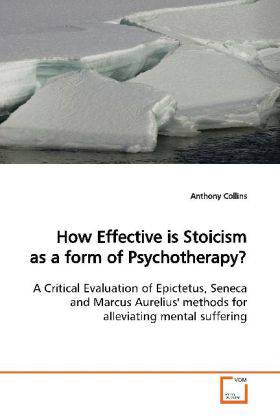
How Effective is Stoicism as a form of Psychotherapy?
A Critical Evaluation of Epictetus, Seneca and Marcus Aurelius' methods for alleviating mental suffering
Anthony Collins
Paperback | Engels
€ 48,45
+ 96 punten
Omschrijving
One in four people in the world today will at some
point suffer from mental illness. Increasingly,
traditional drug based approaches to treatment are
being seen as, at best, short term solutions, and at
worst, completely ineffective and often producing
dangerous side effects. Consequently, there is now a
desire within the medical profession to find a more
holistic cognitive approach to the treatment of
mental illness, one which treats the patient''s body,
mind and soul. The Stoics claim to go far deeper in
their treatment of mental suffering than any modern
drug based, or even modern psycho-analytic approach,
to mental illness: they propose to work directly on
the human soul itself. The desire of the Stoic
Philosophers
was to unite each individual''s soul with the divine
order of the universe, with individuals achieving
a ''God-like'' view of themselves and their human
predicaments within the cosmos. This is an attempt
to assess the Stoics'' claims, and to see if we can
extrapolate psychotherapeutic methodology from their
ancient wisdom in the fight against
mental illness.
point suffer from mental illness. Increasingly,
traditional drug based approaches to treatment are
being seen as, at best, short term solutions, and at
worst, completely ineffective and often producing
dangerous side effects. Consequently, there is now a
desire within the medical profession to find a more
holistic cognitive approach to the treatment of
mental illness, one which treats the patient''s body,
mind and soul. The Stoics claim to go far deeper in
their treatment of mental suffering than any modern
drug based, or even modern psycho-analytic approach,
to mental illness: they propose to work directly on
the human soul itself. The desire of the Stoic
Philosophers
was to unite each individual''s soul with the divine
order of the universe, with individuals achieving
a ''God-like'' view of themselves and their human
predicaments within the cosmos. This is an attempt
to assess the Stoics'' claims, and to see if we can
extrapolate psychotherapeutic methodology from their
ancient wisdom in the fight against
mental illness.
Specificaties
Betrokkenen
- Auteur(s):
- Uitgeverij:
Inhoud
- Aantal bladzijden:
- 72
- Taal:
- Engels
Eigenschappen
- Productcode (EAN):
- 9783639116885
- Uitvoering:
- Paperback
- Afmetingen:
- 220


Alleen bij Standaard Boekhandel
+ 96 punten op je klantenkaart van Standaard Boekhandel
Cadeau

AANGERADEN


Beoordelingen
We publiceren alleen reviews die voldoen aan de voorwaarden voor reviews. Bekijk onze voorwaarden voor reviews.