


- Afhalen na 1 uur in een winkel met voorraad
- Gratis thuislevering in België vanaf € 30
- Ruim aanbod met 7 miljoen producten
- Afhalen na 1 uur in een winkel met voorraad
- Gratis thuislevering in België vanaf € 30
- Ruim aanbod met 7 miljoen producten





€ 36,45
+ 72 punten
Omschrijving
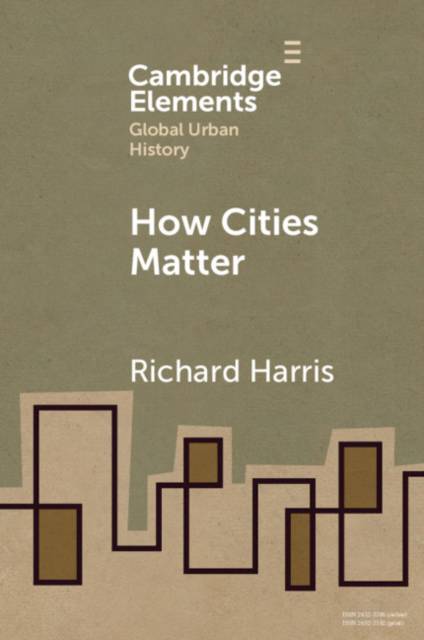
Most historians and social scientists treat cities as mere settings. In fact, urban places shape our experience. There, daily life has a faster, artificial rhythm and, for good and ill, people and agencies affect each other through externalities (uncompensated effects) whose impact is inherently geographical. In economic terms, urban concentration enables efficiency and promotes innovation while raising the costs of land, housing, and labour. Socially, it can alienate or provide anonymity, while fostering new forms of community. It creates congestion and pollution, posing challenges for governance. Some effects extend beyond urban borders, creating cultural change. The character of cities varies by country and world region, but it has generic qualities, a claim best tested by comparing places that are most different. These qualities intertwine, creating built environments that endure. To fully comprehend such path dependency, we need to develop a synthetic vision that is historically and geographically informed.
Specificaties
Betrokkenen
- Auteur(s):
- Uitgeverij:
Inhoud
- Aantal bladzijden:
- 96
- Taal:
- Engels
- Reeks:
Eigenschappen
- Productcode (EAN):
- 9781108749268
- Verschijningsdatum:
- 12/08/2021
- Uitvoering:
- Paperback
- Formaat:
- Trade paperback (VS)
- Afmetingen:
- 152 mm x 229 mm
- Gewicht:
- 140 g


Alleen bij Standaard Boekhandel
+ 72 punten op je klantenkaart van Standaard Boekhandel
Cadeau

AANGERADEN


Beoordelingen
We publiceren alleen reviews die voldoen aan de voorwaarden voor reviews. Bekijk onze voorwaarden voor reviews.