


- Afhalen na 1 uur in een winkel met voorraad
- Gratis thuislevering in België vanaf € 30
- Ruim aanbod met 7 miljoen producten
- Afhalen na 1 uur in een winkel met voorraad
- Gratis thuislevering in België vanaf € 30
- Ruim aanbod met 7 miljoen producten





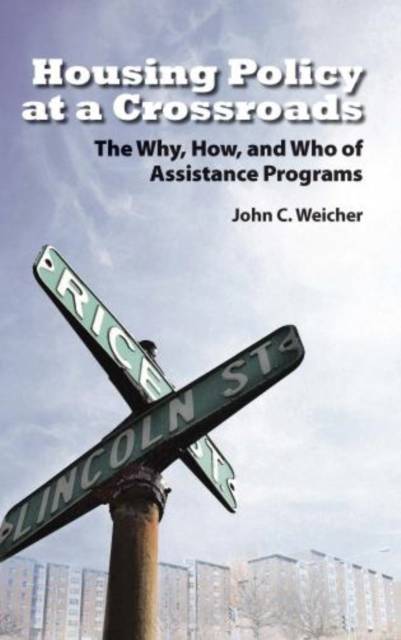
Housing Policy at a Crossroads
The Why, How, and Who of Assistance Programs
John C Weicher
Hardcover | Engels
€ 181,95
+ 363 punten
Eenvoudig bestellen
Veilig betalen


Gratis thuislevering vanaf € 30 (via bpost)
Gratis levering in je Standaard Boekhandel
Omschrijving
Since Franklin D. Roosevelt's New Deal, American housing policy has focused on building homes for the poor. But seventy-five years of federal housing projects have not significantly ameliorated crime, decreased unemployment, or improved health; recent reforms have failed to revitalize low-income neighborhoods or stimulate the economy. To be successful in the twenty-first century, American housing policy must stop reinventing failed programs. Housing Policy at a Crossroads: The Why, How, and Who of Assistance Programs provides a comprehensive survey of past low-income housing programs, including public and subsidized housing, tax credits for developers, and block grants for state and local governments. John C. Weicher's comparative analysis of these programs yields several key conclusions: Affordability, not quality, is the most pressing challenge for housing policy today; of all the housing programs, vouchers have provided the most choice for the poor at the lowest cost to the taxpayer; because vouchers are much less expensive than public or subsidized housing, future subsidized projects would be an inefficient use of resources; vouchers should be offered only to the poorest members of society, ensuring that aid is available to those who need it most. At once a history of housing policy, a guide to issues confronting policymakers, and a case for vouchers as the cheapest, most effective solution, Housing Policy at a Crossroads is a timely warning that reinventing failed building programs would be a very costly wrong turn for America.
Specificaties
Betrokkenen
- Auteur(s):
- Uitgeverij:
Inhoud
- Aantal bladzijden:
- 350
- Taal:
- Engels
Eigenschappen
- Productcode (EAN):
- 9780844742588
- Verschijningsdatum:
- 16/12/2012
- Uitvoering:
- Hardcover
- Formaat:
- Ongenaaid / garenloos gebonden
- Afmetingen:
- 155 mm x 229 mm
- Gewicht:
- 589 g



Alleen bij Standaard Boekhandel
+ 363 punten op je klantenkaart van Standaard Boekhandel
CADEAU

AANGERADEN


Beoordelingen
We publiceren alleen reviews die voldoen aan de voorwaarden voor reviews. Bekijk onze voorwaarden voor reviews.