


- Afhalen na 1 uur in een winkel met voorraad
- Gratis thuislevering in België vanaf € 30
- Ruim aanbod met 7 miljoen producten
- Afhalen na 1 uur in een winkel met voorraad
- Gratis thuislevering in België vanaf € 30
- Ruim aanbod met 7 miljoen producten





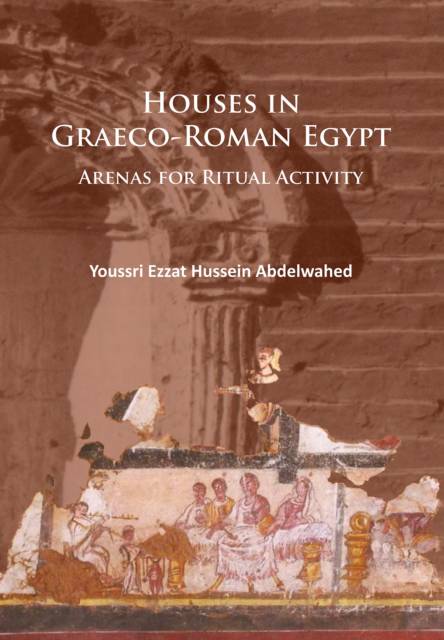
Houses in Graeco-Roman Egypt
Arenas for Ritual Activity
Youssri Ezzat Hussein Abdelwahed
Paperback | Engels
€ 33,95
+ 67 punten
Omschrijving
This book examines different forms of ritual activities performed in houses of Graeco- Roman Egypt. It draws on the rich archaeological record of rural housing and evidence from literature or papyrological references to both urban and rural housing. The introduction critically considers the literature relevant to the topic in order to identify the research gap. Chapter I attempts to reconstruct the structure of urban and rural houses in Graeco- Roman Egypt in the light of papyri and archaeology. This aims to establish the physical and spatial framework for the rituals considered in the following chapters. In line with this reconstruction of domestic properties is the reconstruction of the architectural layout and use of the domestic pylon in Chapter II. Chapter III deals with two rituals enacted before the front door of the house, namely the sacrifice of fish on the 9th of Thoth and the sacrifice of pigs on the 15th of Pachon. Chapter IV considers the ritual of the illumination of lamps for the goddess Athena-Neith within and around houses on the 13th of Epeiph. Chapter V highlights the use of the house as an arena for social types of rituals associated with dining, birthdays, the mallokouria, the epikrisis, and marriage. Chapter VI explores the religious sphere of houses, which is obvious from domestic shrines, wall paintings with religious themes, and figurines of Egyptian and Graeco-Roman deities uncovered from houses. The last chapter deals with mourning rituals, which the house occupants performed after the demise of their beloved animals, such as dogs, and their family members. In the conclusion, I summarize my work and draw out its implications, suggesting that the house was the locus of social, religious, and funerary rituals in Graeco-Roman Egypt.
Specificaties
Betrokkenen
- Auteur(s):
- Uitgeverij:
Inhoud
- Aantal bladzijden:
- 116
- Taal:
- Engels
Eigenschappen
- Productcode (EAN):
- 9781784914370
- Verschijningsdatum:
- 15/04/2017
- Uitvoering:
- Paperback
- Formaat:
- Trade paperback (VS)
- Afmetingen:
- 208 mm x 295 mm
- Gewicht:
- 408 g


Alleen bij Standaard Boekhandel
+ 67 punten op je klantenkaart van Standaard Boekhandel
CADEAU

AANGERADEN


Beoordelingen
We publiceren alleen reviews die voldoen aan de voorwaarden voor reviews. Bekijk onze voorwaarden voor reviews.