


- Afhalen na 1 uur in een winkel met voorraad
- Gratis thuislevering in België vanaf € 30
- Ruim aanbod met 7 miljoen producten
- Afhalen na 1 uur in een winkel met voorraad
- Gratis thuislevering in België vanaf € 30
- Ruim aanbod met 7 miljoen producten





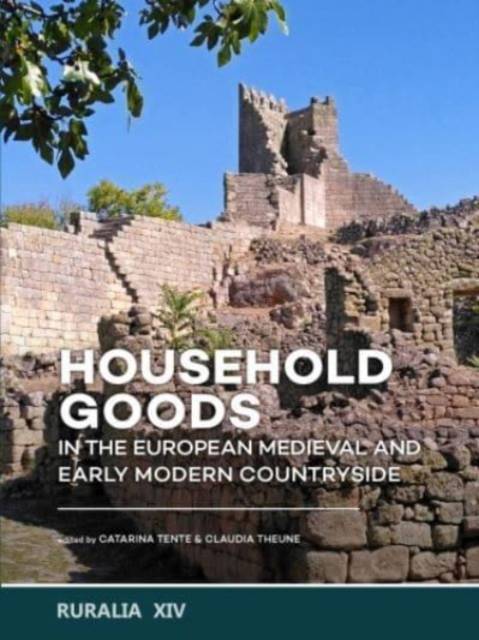
Household Goods in the European Medieval and Early Modern Countryside
Tente Catarina
€ 50,00
+ 100 punten
Uitvoering
Omschrijving
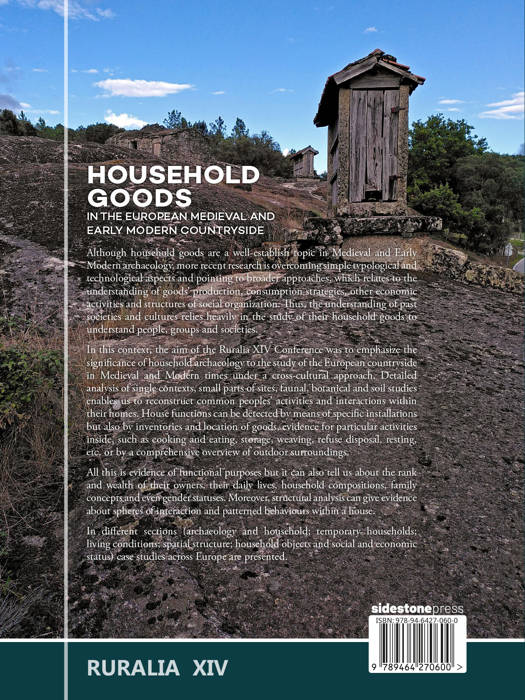
Although household goods are a well-establish topic in Medieval and Early Modern archaeology, more recent research is overcoming simple typological and technological aspects and pointing to broader approaches, which relates to the understanding of goods' production, consumption strategies, other economic activities and structures of social organization. Thus, the understanding of past societies and cultures relies heavily in the study of their household goods to understand people, groups and societies.
In this context, the aim of the Ruralia XIV Conference was to emphasize the significance of household archaeology to the study of the European countryside in Medieval and Modern times under a cross-cultural approach. Detailed analysis of single contexts, small parts of sites, faunal, botanical and soil studies enables us to reconstruct common peoples' activities and interactions within their homes. House functions can be detected by means of specific installations but also by inventories and location of goods, evidence for particular activities inside, such as cooking and eating, storage, weaving, refuse disposal, resting, etc. or by a comprehensive overview of outdoor surroundings.
All this is evidence of functional purposes but it can also tell us about the rank and wealth of their owners, their daily lives, household compositions, family concepts and even gender statuses. Moreover, structural analysis can give evidence about spheres of interaction and patterned behaviors within a house.
In different sections (archaeology and household; temporary households; living conditions; spatial structure; household objects and social and economic status) case studies across Europe are presented.
In this context, the aim of the Ruralia XIV Conference was to emphasize the significance of household archaeology to the study of the European countryside in Medieval and Modern times under a cross-cultural approach. Detailed analysis of single contexts, small parts of sites, faunal, botanical and soil studies enables us to reconstruct common peoples' activities and interactions within their homes. House functions can be detected by means of specific installations but also by inventories and location of goods, evidence for particular activities inside, such as cooking and eating, storage, weaving, refuse disposal, resting, etc. or by a comprehensive overview of outdoor surroundings.
All this is evidence of functional purposes but it can also tell us about the rank and wealth of their owners, their daily lives, household compositions, family concepts and even gender statuses. Moreover, structural analysis can give evidence about spheres of interaction and patterned behaviors within a house.
In different sections (archaeology and household; temporary households; living conditions; spatial structure; household objects and social and economic status) case studies across Europe are presented.
Specificaties
Betrokkenen
- Auteur(s):
- Uitgeverij:
Inhoud
- Aantal bladzijden:
- 276
- Taal:
- Engels
- Reeks:
Eigenschappen
- Productcode (EAN):
- 9789464270600
- Verschijningsdatum:
- 7/09/2023
- Uitvoering:
- Paperback
- Formaat:
- Trade paperback (VS)
- Afmetingen:
- 210 mm x 279 mm
- Gewicht:
- 968 g


Alleen bij Standaard Boekhandel
+ 100 punten op je klantenkaart van Standaard Boekhandel
Cadeau

AANGERADEN


Beoordelingen
We publiceren alleen reviews die voldoen aan de voorwaarden voor reviews. Bekijk onze voorwaarden voor reviews.