


- Afhalen na 1 uur in een winkel met voorraad
- Gratis thuislevering in België vanaf € 30
- Ruim aanbod met 7 miljoen producten
- Afhalen na 1 uur in een winkel met voorraad
- Gratis thuislevering in België vanaf € 30
- Ruim aanbod met 7 miljoen producten





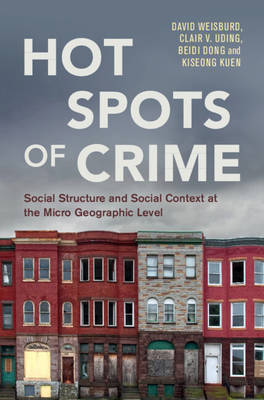
Hot Spots of Crime
Social Structure and Social Context at the Micro Geographic Level
David Weisburd, Clair V Uding, Beidi Dong, Kiseong Kuen
Paperback | Engels
€ 33,95
+ 67 punten
Uitvoering
Omschrijving
While hot spots of crime have become an important focus of study in criminology and an important focus of crime prevention in programs like hot spots policing, to date we know little about these places. Who lives in hot spots of crime? What factors lead to these places becoming crime hot spots? What other social and health problems are found in these places? The book draws on more than 7,000 surveys of people living on crime hot spot and non-hot spot streets, systematic physical and social observations, and structured qualitative data collection. The results of this study illustrate that hot spots of crime are not just hot spots for crime, but also many other social ills. By shedding light on the social features of hot spots of crime, the book recognizes the importance of informal social controls in understanding and preventing crime at crime hot spots. This title is also available as open access on Cambridge Core.
Specificaties
Betrokkenen
- Auteur(s):
- Uitgeverij:
Inhoud
- Aantal bladzijden:
- 250
- Taal:
- Engels
Eigenschappen
- Productcode (EAN):
- 9781009352833
- Verschijningsdatum:
- 31/07/2026
- Uitvoering:
- Paperback
- Formaat:
- Trade paperback (VS)


Alleen bij Standaard Boekhandel
+ 67 punten op je klantenkaart van Standaard Boekhandel
Cadeau

AANGERADEN


Beoordelingen
We publiceren alleen reviews die voldoen aan de voorwaarden voor reviews. Bekijk onze voorwaarden voor reviews.