



Bedankt voor het vertrouwen het afgelopen jaar! Om jou te bedanken bieden we GRATIS verzending (in België) aan op alles gedurende de hele maand januari.
- Afhalen na 1 uur in een winkel met voorraad
- In januari gratis thuislevering in België
- Ruim aanbod met 7 miljoen producten
Bedankt voor het vertrouwen het afgelopen jaar! Om jou te bedanken bieden we GRATIS verzending (in België) aan op alles gedurende de hele maand januari.
- Afhalen na 1 uur in een winkel met voorraad
- In januari gratis thuislevering in België
- Ruim aanbod met 7 miljoen producten





€ 178,45
+ 356 punten
Omschrijving
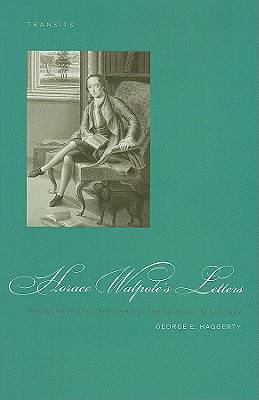
In looking closely at Horace Walpole's Correspondence, George E. Haggerty shows how these letters, when taken in aggregate, offer an astonishingly vivid account of the vagaries of eighteenth-century masculinity. Walpole talks about himself obsessively: his wants, his needs, his desires; his physical and mental pain; his artistic appreciation and his critical responses. It is impossible to read these letters and not come away with a vivid impression of a complex personality from another age. Haggerty examines the ways in which Walpole presents himself as an eighteenth-century gentleman, and considers his personal relationships, his needs and aspirations, his emotionalism and his rationality-in short, his construction of himself-in order to see what it tells us about the age in general and more specifically, about masculinity in an era of social flux.
This study of Walpole and his epistolary relations offers a unique window into both the history of masculinity in the eighteenth century and the codification of friendship as the preeminent value in western culture. Recent studies have tried to rewrite Walpole in a twenty-first century mold while this work looks at the writer and the ways in which he constructs himself and his relations, not in hopes of uncovering a lurid secret, but rather in pursuit of the figure that he created and that has fascinated generations of readers and writers since the eighteenth century.
This study of Walpole and his epistolary relations offers a unique window into both the history of masculinity in the eighteenth century and the codification of friendship as the preeminent value in western culture. Recent studies have tried to rewrite Walpole in a twenty-first century mold while this work looks at the writer and the ways in which he constructs himself and his relations, not in hopes of uncovering a lurid secret, but rather in pursuit of the figure that he created and that has fascinated generations of readers and writers since the eighteenth century.
Specificaties
Betrokkenen
- Auteur(s):
- Uitgeverij:
Inhoud
- Aantal bladzijden:
- 186
- Taal:
- Engels
- Reeks:
Eigenschappen
- Productcode (EAN):
- 9781611480108
- Verschijningsdatum:
- 12/05/2011
- Uitvoering:
- Hardcover
- Formaat:
- Ongenaaid / garenloos gebonden
- Afmetingen:
- 155 mm x 229 mm
- Gewicht:
- 385 g


Alleen bij Standaard Boekhandel
+ 356 punten op je klantenkaart van Standaard Boekhandel
SOLDEN


Beoordelingen
We publiceren alleen reviews die voldoen aan de voorwaarden voor reviews. Bekijk onze voorwaarden voor reviews.