


- Afhalen na 1 uur in een winkel met voorraad
- Gratis thuislevering in België vanaf € 30
- Ruim aanbod met 7 miljoen producten
- Afhalen na 1 uur in een winkel met voorraad
- Gratis thuislevering in België vanaf € 30
- Ruim aanbod met 7 miljoen producten





€ 271,45
+ 542 punten
Uitvoering
Omschrijving
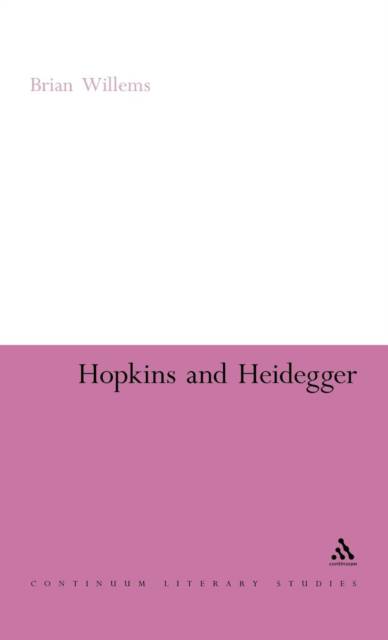
Hopkins and Heidegger is a new exploration of Gerard Manley Hopkins' poetics through the work of Martin Heidegger. More radically, Brian Willems argues that the work of Hopkins does no less than propose solutions to a number of hitherto unresolved questions regarding Heidegger's later writings, vitalizing the concepts of both writers beyond their local contexts. Willems examines a number of cross-sections between the poetry and thought of Hopkins and the philosophy of Heidegger. While neither writer ever directly addressed the other's work - Hopkins died the year Heidegger was born, 1899, and Heidegger never turns his thoughts on poetry to the Victorians - a number of similarities between the two have been noted but never fleshed out. Willems' readings of these cross-sections are centred on Hopkins' concepts of 'inscape' and 'instress' and around Heidegger's reading of both appropriation (Ereignis) and the fourfold (das Geviert).
This study will be of interest to scholars and postgraduates in both Victorian literature and Continental philosophy.
Specificaties
Betrokkenen
- Auteur(s):
- Uitgeverij:
Inhoud
- Aantal bladzijden:
- 142
- Taal:
- Engels
- Reeks:
Eigenschappen
- Productcode (EAN):
- 9781441169563
- Verschijningsdatum:
- 16/01/2010
- Uitvoering:
- Hardcover
- Formaat:
- Genaaid
- Afmetingen:
- 137 mm x 221 mm
- Gewicht:
- 294 g



Alleen bij Standaard Boekhandel
+ 542 punten op je klantenkaart van Standaard Boekhandel
Cadeau

AANGERADEN


Beoordelingen
We publiceren alleen reviews die voldoen aan de voorwaarden voor reviews. Bekijk onze voorwaarden voor reviews.