


- Afhalen na 1 uur in een winkel met voorraad
- Gratis thuislevering in België vanaf € 30
- Ruim aanbod met 7 miljoen producten
- Afhalen na 1 uur in een winkel met voorraad
- Gratis thuislevering in België vanaf € 30
- Ruim aanbod met 7 miljoen producten





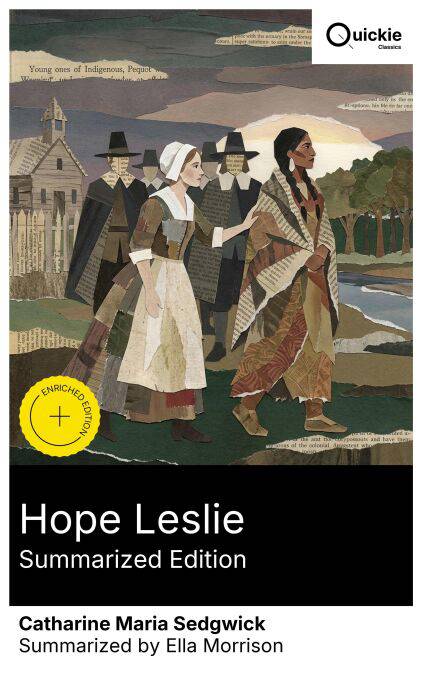
Hope Leslie (Summarized Edition) E-BOOK
Enriched edition. Female empowerment amid Puritan New England: a Romantic-realistic portrait of colonial society, Indigenous voices, and stirrings of social reform
Catharine Maria Sedgwick
E-book | Engels
€ 1,99
+ 1 punten
Omschrijving
Set in 1640s Puritan Massachusetts and the Connecticut frontier, Hope Leslie traces its spirited heroine, her foster-brother Everell Fletcher, and the Pequot woman Magawisca through the unsettled aftermath of the Pequot War. Blending archival detail with brisk romance, Sedgwick turns captivity, courtroom, and council scenes into probes of authority and conscience, revising Scottian and Cooperian models by centering female agency, religious toleration, and cross-cultural sympathy. Catharine Maria Sedgwick, a leading novelist of the early republic, wrote from Stockbridge, Massachusetts, where proximity to Mahican communities and the reformist example of her father, jurist Theodore Sedgwick—counsel to Elizabeth Freeman in her landmark freedom suit—sharpened her historical conscience. A Unitarian moralist, she composed the 1827 novel amid arguments over national character, Indian policy, and women's civic voice, transforming local memory into political romance. For readers of early American literature and historical fiction, Hope Leslie offers narrative verve and moral complexity. Its memorable heroines, humane portrayal of Native characters, and incisive critique of Puritan patriarchy reward classroom study and private reading alike, inviting reflection on tolerance, sovereignty, and belonging today.
Quickie Classics summarizes timeless works with precision, preserving the author's voice and keeping the prose clear, fast, and readable—distilled, never diluted. Enriched Edition extras: Introduction · Synopsis · Historical Context · Brief Analysis · 4 Reflection Q&As · Editorial Footnotes.
Quickie Classics summarizes timeless works with precision, preserving the author's voice and keeping the prose clear, fast, and readable—distilled, never diluted. Enriched Edition extras: Introduction · Synopsis · Historical Context · Brief Analysis · 4 Reflection Q&As · Editorial Footnotes.
Specificaties
Betrokkenen
- Auteur(s):
- Uitgeverij:
Inhoud
- Aantal bladzijden:
- 121
- Taal:
- Engels
Eigenschappen
- Productcode (EAN):
- 8596547883791
- Verschijningsdatum:
- 9/01/2026
- Uitvoering:
- E-book
- Beveiligd met:
- Digital watermarking
- Formaat:
- ePub


Alleen bij Standaard Boekhandel
+ 1 punten op je klantenkaart van Standaard Boekhandel
Cadeau

AANGERADEN


Beoordelingen
We publiceren alleen reviews die voldoen aan de voorwaarden voor reviews. Bekijk onze voorwaarden voor reviews.