


- Afhalen na 1 uur in een winkel met voorraad
- Gratis thuislevering in België vanaf € 30
- Ruim aanbod met 7 miljoen producten
- Afhalen na 1 uur in een winkel met voorraad
- Gratis thuislevering in België vanaf € 30
- Ruim aanbod met 7 miljoen producten





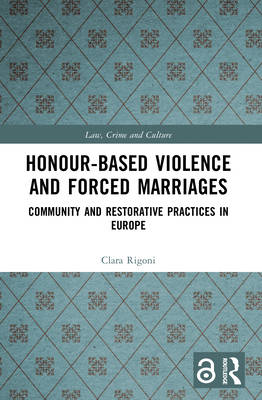
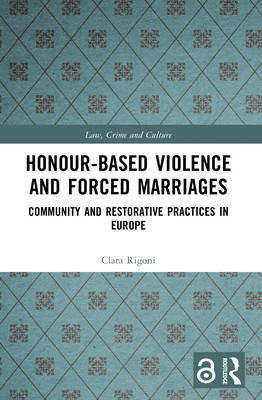
Honour-Based Violence and Forced Marriages
Community and Restorative Practices in Europe
Clara Rigoni
€ 88,95
+ 177 punten
Eenvoudig bestellen
Veilig betalen


Gratis thuislevering vanaf € 30 (via bpost)
Gratis levering in je Standaard Boekhandel
Omschrijving
In the last 20 years, the related phenomena of honour-based violence and forced marriages have received increasing attention at the international and European level. Punitive responses towards this type of violence have been adopted, including ad hoc criminalisation and legislation containing direct references to the concepts of honour, culture, and tradition. However, criminal law-based responses present several shortcomings and have often disregarded the specific needs that victims of such crimes might encounter. This book examines the possibility of using alternative programmes to address cases of honour-based violence and forced marriages. After reviewing previous existing literature, it presents new empirical data. Introducing a case study from the United Kingdom, the book recalls the debate on Sharia Councils and the Muslim Arbitration Tribunal, but examines instead other community-based secular programmes. By comparison, a study from Norway on the work of the National Mediation Agency and the so-called Cross-Cultural Transformative Mediation model is investigated as part of a larger multi-agency approach. Ultimately, in an attempt to reconcile pluralism and the rule of law, the book proposes effective ways to tackle honour crimes based on cooperation and individualisation of the proceedings, and capable of improving women's access to justice and reducing secondary victimisation. The book will be essential reading for researchers and academics in Law, Criminology, Sociology, and Anthropology and for policy-makers and practitioners working with honour-based violence cases.
Specificaties
Betrokkenen
- Auteur(s):
- Uitgeverij:
Inhoud
- Aantal bladzijden:
- 276
- Taal:
- Engels
- Reeks:
Eigenschappen
- Productcode (EAN):
- 9780367505981
- Verschijningsdatum:
- 27/05/2024
- Uitvoering:
- Paperback
- Formaat:
- Trade paperback (VS)
- Afmetingen:
- 156 mm x 234 mm
- Gewicht:
- 403 g


Alleen bij Standaard Boekhandel
+ 177 punten op je klantenkaart van Standaard Boekhandel
CADEAU

AANGERADEN


Beoordelingen
We publiceren alleen reviews die voldoen aan de voorwaarden voor reviews. Bekijk onze voorwaarden voor reviews.