


- Afhalen na 1 uur in een winkel met voorraad
- Gratis thuislevering in België vanaf € 30
- Ruim aanbod met 7 miljoen producten
- Afhalen na 1 uur in een winkel met voorraad
- Gratis thuislevering in België vanaf € 30
- Ruim aanbod met 7 miljoen producten





€ 296,95
+ 593 punten
Uitvoering
Omschrijving
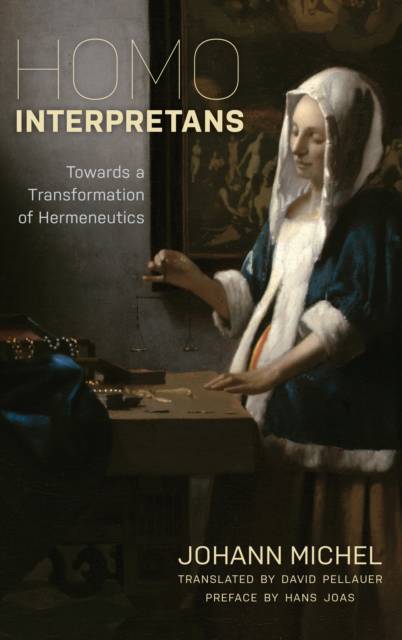
When do we interpret? That is the question at the heart of this important new work by Johann Michel. The human being does not spend his time interpreting in everyday life. We interpret when we are confronted with a blurred, confused, problematic sense. Such is the originality of the author's perspective which removes the anthropological interdict that has hampered hermeneutics since Heidegger. Michel proposes an anthropology of homo interpretans as the first and founding principle of fundamental ontology (relating to the meaning of being) as well as of the theory of knowledge (relating to interpretation in the human sciences). He argues that the root of hermeneutics lies in ordinary interpretative techniques (explication, clarification, unveiling), rather than as a set of learned technologies applied to specific fields (texts, symbols, actions).
Specificaties
Betrokkenen
- Auteur(s):
- Vertaler(s):
- Uitgeverij:
Inhoud
- Aantal bladzijden:
- 316
- Taal:
- Engels
Eigenschappen
- Productcode (EAN):
- 9781786608826
- Verschijningsdatum:
- 8/04/2019
- Uitvoering:
- Hardcover
- Formaat:
- Genaaid
- Afmetingen:
- 152 mm x 229 mm
- Gewicht:
- 635 g


Alleen bij Standaard Boekhandel
+ 593 punten op je klantenkaart van Standaard Boekhandel
Cadeau

AANGERADEN


Beoordelingen
We publiceren alleen reviews die voldoen aan de voorwaarden voor reviews. Bekijk onze voorwaarden voor reviews.