


- Afhalen na 1 uur in een winkel met voorraad
- Gratis thuislevering in België vanaf € 30
- Ruim aanbod met 7 miljoen producten
- Afhalen na 1 uur in een winkel met voorraad
- Gratis thuislevering in België vanaf € 30
- Ruim aanbod met 7 miljoen producten





€ 86,95
+ 173 punten
Omschrijving
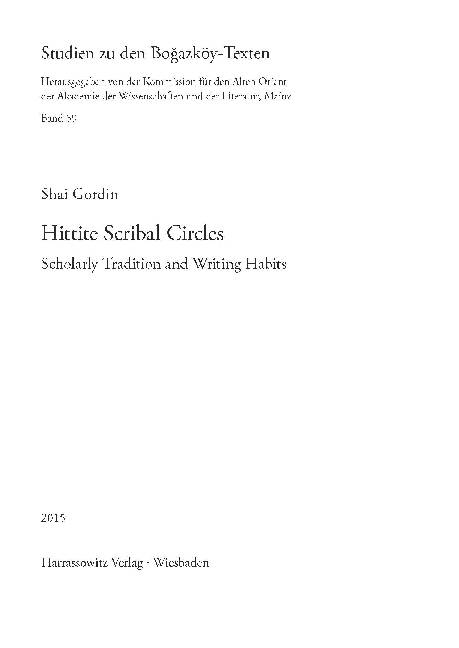
Similarly to monks in medieval scriptoria, learned Hittite scholars spent the majority of their time in rooms or halls (and sometimes courtyards), copying, in Hittite cuneiform, different texts onto clay. Many scribes formulated distinct colophons for the manuscripts they produced. The analysis of the information on different scribes, their colleagues, family members, copying work, bureaus and writing habits present in the manuscripts is at the center of Shai Godin's study. The book opens with a useful introduction to the various aspects of Hittite scholarly culture, especially in the Hittite capital of Hattusa, to its archives, to text genres, tablet types and writing medium, aspects of layout, reading, and writing. The author then identifies the personal signatures of more than 60 scribes on about 130 manuscripts. Beside names, the signatures contain titles and kinship affiliations, which enables him to relate the production of specific manuscripts to a certain scribal office, family, or school. Due to the isolation of the idiosyncratic elements of more than 40 signed manuscripts compared with hundreds of photographed cuneiform signs, the study approaches the Hittite scribes from a genuinely fresh perspective and creates a kind of reference guide for Hittite writing traditions of the 13th century BCE, which are otherwise difficult to be dated or identified. The main results of this research clarify the transmission of certain textual traditions and recurrent graphic and orthographical conventions within specific scribal schools or families in the course of time.
Specificaties
Betrokkenen
- Auteur(s):
- Uitgeverij:
Inhoud
- Aantal bladzijden:
- 461
- Taal:
- Engels
- Reeks:
- Reeksnummer:
- nr. 59
Eigenschappen
- Productcode (EAN):
- 9783447105262
- Verschijningsdatum:
- 14/12/2015
- Uitvoering:
- Hardcover
- Formaat:
- Genaaid
- Afmetingen:
- 170 mm x 244 mm
- Gewicht:
- 997 g


Alleen bij Standaard Boekhandel
+ 173 punten op je klantenkaart van Standaard Boekhandel
Cadeau

AANGERADEN


Beoordelingen
We publiceren alleen reviews die voldoen aan de voorwaarden voor reviews. Bekijk onze voorwaarden voor reviews.