


- Afhalen na 1 uur in een winkel met voorraad
- Gratis thuislevering in België vanaf € 30
- Ruim aanbod met 7 miljoen producten
- Afhalen na 1 uur in een winkel met voorraad
- Gratis thuislevering in België vanaf € 30
- Ruim aanbod met 7 miljoen producten





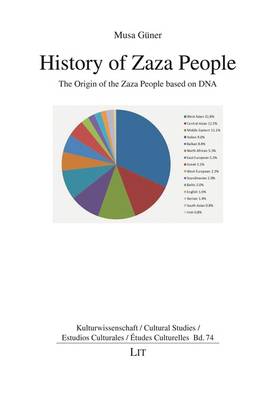
History of Zaza People
The Origin of the Zaza People Based on DNA
Musa Güner
Paperback | Engels | Kulturwissenschaft / Cultural Studies / Estudios Culturales / Études Culturelles
€ 29,45
+ 58 punten
Omschrijving
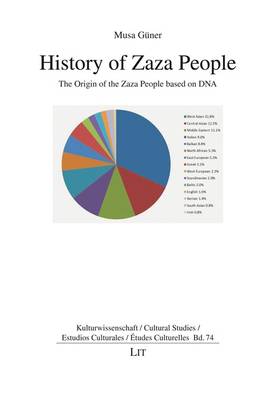
This work is dedicated to the history of the Zaza people, the third largest ethnic group in Turkey. The compilation table presents average values of the estimated ethnicity distribution of the Zaza candidates for different DNA testing companies. DNA is the tree of the unwritten folk groups. Effective isolation has given the Zaza people their own DNA. It shows that exclusivity and endogamy in the heartland "Zazadiyar" has made the DNA of the Zazas a distinctive species. The term "Zaza" is mentioned on cuneiform clay tablets as early as 3100 BC. Their homeland lies at the source of the Tigris and Euphrates rivers. DNA tests confirm the kinship of the Zaza tribes. They show that exclusivity and endogamy in the heartland of "Zazadiyar" made the Zaza's DNA unique. Studies on DNA, languages, migrations, religious environments, living habits, agriculture, and cultural activities contribute to knowledge about the origins of the Zaza people and are discussed here.
Musa Güner worked as researcher at Lund University in Sweden, and held a professorship in mineralogy at Hacettepe University in Ankara.
Musa Güner worked as researcher at Lund University in Sweden, and held a professorship in mineralogy at Hacettepe University in Ankara.
Specificaties
Betrokkenen
- Auteur(s):
- Uitgeverij:
Inhoud
- Aantal bladzijden:
- 150
- Taal:
- Engels
- Reeks:
Eigenschappen
- Productcode (EAN):
- 9783643917195
- Verschijningsdatum:
- 01/10/2025
- Uitvoering:
- Paperback
- Formaat:
- Trade paperback (VS)
- Afmetingen:
- 140 mm x 210 mm


Alleen bij Standaard Boekhandel
+ 58 punten op je klantenkaart van Standaard Boekhandel
Cadeau

AANGERADEN


Beoordelingen
We publiceren alleen reviews die voldoen aan de voorwaarden voor reviews. Bekijk onze voorwaarden voor reviews.