


- Afhalen na 1 uur in een winkel met voorraad
- Gratis thuislevering in België vanaf € 30
- Ruim aanbod met 7 miljoen producten
- Afhalen na 1 uur in een winkel met voorraad
- Gratis thuislevering in België vanaf € 30
- Ruim aanbod met 7 miljoen producten





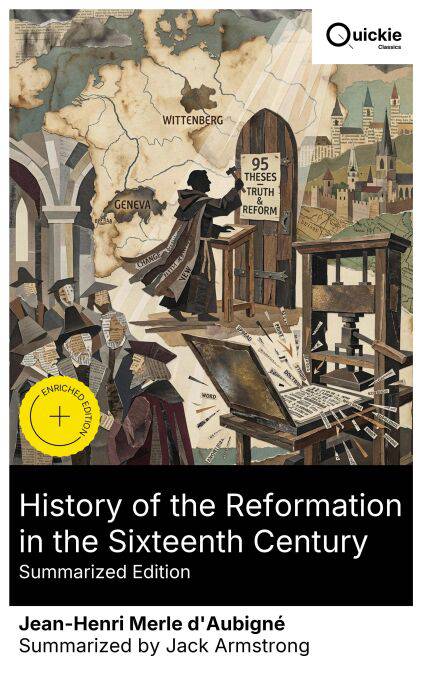
History of the Reformation in the Sixteenth Century (Summarized Edition) E-BOOK
Enriched edition. How Doctrine, Printing, and Civic Power Remade Europe: A Source‑Rich Chronicle from Wittenberg to Geneva
Jean-Henri Merle d'Aubigné
E-book | Engels
€ 1,99
+ 1 punten
Omschrijving
History of the Reformation in the Sixteenth Century (Vol. 1–5) delivers a sweeping, source‑literate narrative of how evangelical faith moved from cloister to council chamber. Opening with Luther's Wittenberg breakthrough and tracing Swiss and wider European currents, it blends biography, doctrine, and civic conflict. Written in vivid, providential prose, yet anchored in letters, edicts, and disputations, it locates reform within late‑medieval piety, humanism, and print. Jean‑Henri Merle d'Aubigné (1794–1872), a Genevan pastor‑historian, studied at Geneva, was stirred by Robert Haldane's Bible lectures, served French‑speaking congregations in Hamburg and Brussels, and later taught church history at Geneva's Evangelical School. These encounters—with revival, political upheaval, and church–state tensions—shaped his aim to defend evangelical liberty of conscience through a narrative grounded in archives and travel. Readers of church and intellectual history will find this classic both a monument of nineteenth‑century Protestant scholarship and a gripping chronicle of the sixteenth. Read it alongside newer critical studies: despite confessional bias, its portraits, documentation, and narrative drive make it an indispensable guide to how doctrine, printing, and civic power remade Europe.
Quickie Classics summarizes timeless works with precision, preserving the author's voice and keeping the prose clear, fast, and readable—distilled, never diluted. Enriched Edition extras: Introduction · Synopsis · Historical Context · Brief Analysis · 4 Reflection Q&As · Editorial Footnotes.
Quickie Classics summarizes timeless works with precision, preserving the author's voice and keeping the prose clear, fast, and readable—distilled, never diluted. Enriched Edition extras: Introduction · Synopsis · Historical Context · Brief Analysis · 4 Reflection Q&As · Editorial Footnotes.
Specificaties
Betrokkenen
- Auteur(s):
- Vertaler(s):
- Uitgeverij:
Inhoud
- Aantal bladzijden:
- 624
- Taal:
- Engels
Eigenschappen
- Productcode (EAN):
- 8596547877783
- Verschijningsdatum:
- 9/01/2026
- Uitvoering:
- E-book
- Beveiligd met:
- Digital watermarking
- Formaat:
- ePub


Alleen bij Standaard Boekhandel
+ 1 punten op je klantenkaart van Standaard Boekhandel
Cadeau

AANGERADEN


Beoordelingen
We publiceren alleen reviews die voldoen aan de voorwaarden voor reviews. Bekijk onze voorwaarden voor reviews.