



Je cadeautjes zeker op tijd in huis hebben voor de feestdagen? Kom langs in onze winkels en vind het perfecte geschenk!
- Afhalen na 1 uur in een winkel met voorraad
- Gratis thuislevering in België vanaf € 30
- Ruim aanbod met 7 miljoen producten
Je cadeautjes zeker op tijd in huis hebben voor de feestdagen? Kom langs in onze winkels en vind het perfecte geschenk!
- Afhalen na 1 uur in een winkel met voorraad
- Gratis thuislevering in België vanaf € 30
- Ruim aanbod met 7 miljoen producten





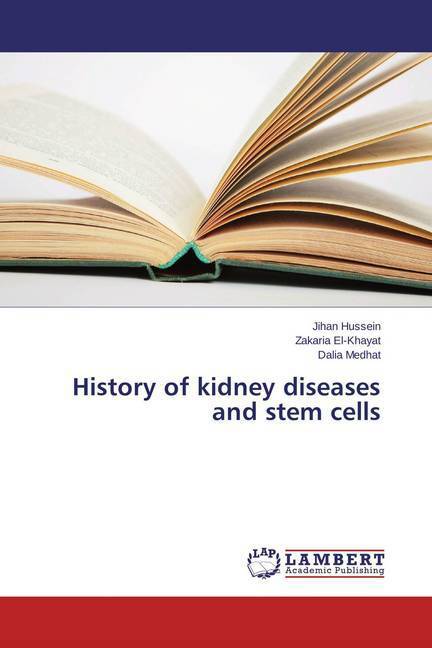
History of kidney diseases and stem cells
Jihan Hussein, Zakaria El-Khayat, Dalia Medhat
Paperback | Engels
€ 38,95
+ 77 punten
Omschrijving
Diabetes mellitus and hypertension represent major causes of chronic kidney diseases and initiation of dialysis; In addition, glomerular diseases, malnutrition, infectious diseases, and acute kidney injury can progress to end-stage renal disease, contributing to the increased global burden of death associated with this condition. Current treatment modalities often fail to target the major underlying contributors for progression of renal disease. Indications for kidney transplantation have expanded considerably in terms of recipient age, primary disease leading to end-stage renal failure, and degree of deterioration in clinical condition at the time of transplantation. The wide tissue distribution and multipotent differentiation of mesenchymal stem cells (MSCs) together with the observed reparative effects of infused MSCs in many clinical and preclinical models strongly suggest a critical role of MSCs in injury healing. MSC hold special promise for renal repair, because nephrons are largely of mesenchymal origin. MSCs attenuated renal inflammation, endoplasmic-reticulum stress, and apoptosis through mechanisms involving cell contact.
Specificaties
Betrokkenen
- Auteur(s):
- Uitgeverij:
Inhoud
- Aantal bladzijden:
- 72
- Taal:
- Engels
Eigenschappen
- Productcode (EAN):
- 9783659805110
- Verschijningsdatum:
- 19/11/2015
- Uitvoering:
- Paperback
- Afmetingen:
- 150 mm x 220 mm
- Gewicht:
- 118 g


Alleen bij Standaard Boekhandel
+ 77 punten op je klantenkaart van Standaard Boekhandel
CADEAU


Beoordelingen
We publiceren alleen reviews die voldoen aan de voorwaarden voor reviews. Bekijk onze voorwaarden voor reviews.