


- Afhalen na 1 uur in een winkel met voorraad
- Gratis thuislevering in België vanaf € 30
- Ruim aanbod met 7 miljoen producten
- Afhalen na 1 uur in een winkel met voorraad
- Gratis thuislevering in België vanaf € 30
- Ruim aanbod met 7 miljoen producten





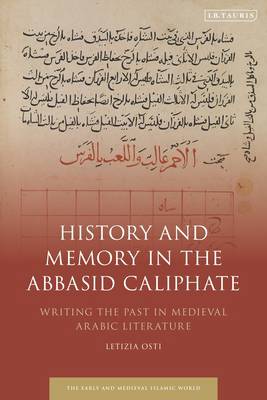
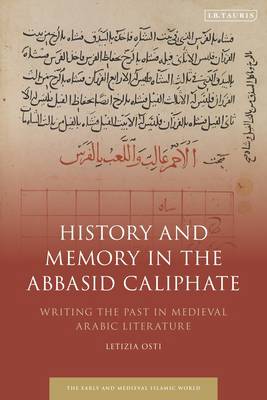
History and Memory in the Abbasid Caliphate
Writing the Past in Medieval Arabic Literature
Letizia Osti
€ 220,45
+ 440 punten
Omschrijving
Abu Bakr al-Suli was an Abbasid polymath and table companion, as well as a legendary chess player. He was perhaps best known for his work on poetry and chancery, which would have a long-lasting influence on Arabic literature. His decades of service at the court of at least three caliphs give him a unique perspective as an historian of his own time, although he is often valued as an observer rather than an interpreter of events for posterity.
Letizia Osti here provides the first full-length English-language study devoted to al-Suli, illustrating how investigating the life, times and works of such a complex individual can serve as a fil rouge for tackling broader, contested concepts, such as biography, autobiography, court culture, and written culture. The result is an exploration of the ways in which the Abbasid court made sense of the past and, in general, of what 'historiography' means in a medieval Arabic context.
Specificaties
Betrokkenen
- Auteur(s):
- Uitgeverij:
Inhoud
- Aantal bladzijden:
- 200
- Taal:
- Engels
- Reeks:
Eigenschappen
- Productcode (EAN):
- 9781788319232
- Verschijningsdatum:
- 16/06/2022
- Uitvoering:
- Hardcover
- Formaat:
- Genaaid
- Afmetingen:
- 156 mm x 234 mm
- Gewicht:
- 453 g


Alleen bij Standaard Boekhandel
+ 440 punten op je klantenkaart van Standaard Boekhandel
Cadeau

AANGERADEN


Beoordelingen
We publiceren alleen reviews die voldoen aan de voorwaarden voor reviews. Bekijk onze voorwaarden voor reviews.