


- Afhalen na 1 uur in een winkel met voorraad
- Gratis thuislevering in België vanaf € 30
- Ruim aanbod met 7 miljoen producten
- Afhalen na 1 uur in een winkel met voorraad
- Gratis thuislevering in België vanaf € 30
- Ruim aanbod met 7 miljoen producten




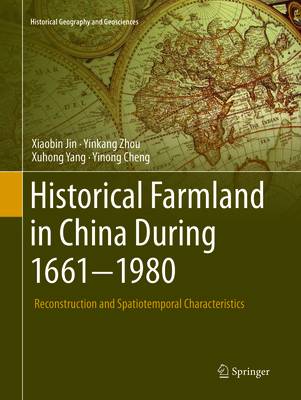
Historical Farmland in China During 1661-1980
Reconstruction and Spatiotemporal Characteristics
Xiaobin Jin, Yinkang Zhou, Xuhong Yang, Yinong Cheng
€ 108,45
+ 216 punten
Uitvoering
Omschrijving
This book explores various approaches to reconstruct the spatial and temporal distribution of historical farmland in China. Almost all available historical data about farmland such as historical documents, archives, taxation records, statistics and research outcomes have been collected to reconstruct the amount of historical farmland.
Specificaties
Betrokkenen
- Auteur(s):
- Uitgeverij:
Inhoud
- Aantal bladzijden:
- 138
- Taal:
- Engels
- Reeks:
Eigenschappen
- Productcode (EAN):
- 9783319891149
- Verschijningsdatum:
- 6/06/2019
- Uitvoering:
- Paperback
- Afmetingen:
- 211 mm x 280 mm
- Gewicht:
- 482 g


Alleen bij Standaard Boekhandel
+ 216 punten op je klantenkaart van Standaard Boekhandel
AANGERADEN


Beoordelingen
We publiceren alleen reviews die voldoen aan de voorwaarden voor reviews. Bekijk onze voorwaarden voor reviews.