


- Afhalen na 1 uur in een winkel met voorraad
- Gratis thuislevering in België vanaf € 30
- Ruim aanbod met 7 miljoen producten
- Afhalen na 1 uur in een winkel met voorraad
- Gratis thuislevering in België vanaf € 30
- Ruim aanbod met 7 miljoen producten





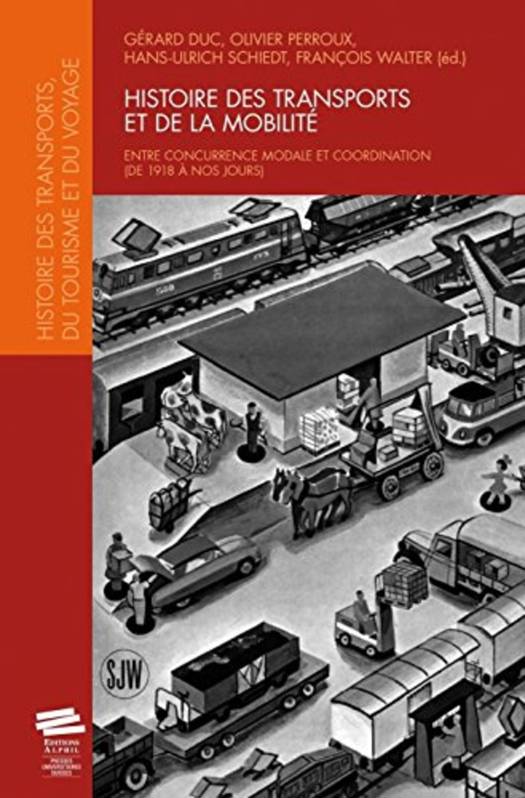
Histoire des transports et de la mobilité / Transport and mobility history
Hans-Ulrich Schiedt, Olivier Perroux, Gérard Duc
Boek | Frans
€ 39,00
+ 78 punten
Omschrijving
Depuis les années 1920 et la croissance du transport routier, les enjeux liés
à la coordination des mobilités n'ont cessé d'occuper les autorités. Dans tous
les pays occidentaux, ces enjeux sont aujourd'hui au centre de l'agenda
politique. Or, aussi bien la situation actuelle que les réponses apportées aux
problématiques complexes de la coordination des mobilités ont un solide
ancrage historique.
Pendant de longues années, l'histoire des transports s'est cantonnée à
l'histoire des techniques, du matériel roulant aux infrastructures, et des
relations entre croissance économique et infrastructures de transport.
La vingtaine de contributions provenant d'historiens, de géographes et
d'économistes de huit pays européens rassemblée dans cet ouvrage vise
davantage à étudier le comportement des agents de la mobilité (usagers,
lobbies...), les effets de la démocratisation de la mobilité et les conflits
territoriaux nés de celle-ci, aussi bien au niveau international que dans les
espaces nationaux et urbains.
Since the 1920s and the growth of road transport, mobility coordination
issues have constantly preoccupied the authorities. In all Western countries,
these issues are now at the centre of the political agenda. However, the
current situation and the answers to the complex problems of mobility
coordination have strong historical roots.
For many years, the history of transport has been confined to the history
of technology, from rolling stock to infrastructure, and the relationship
between economic growth and transport infrastructure. The twenty or so
contributions gathered together in this book, from historians, geographers
and economists from eight European countries, are more concerned with
studying the behaviour of agents of mobility (users, lobbies, etc.), the effects
of the democratisation of mobility and the territorial conflici arising from it,
both internationally and in national and urban spaces.
Specificaties
Betrokkenen
- Auteur(s):
- Uitgeverij:
Inhoud
- Aantal bladzijden:
- 460
- Taal:
- Frans
Eigenschappen
- Productcode (EAN):
- 9782940489541
- Verschijningsdatum:
- 26/04/2014
- Uitvoering:
- Boek
- Afmetingen:
- 150 mm x 225 mm
- Gewicht:
- 644 g


Alleen bij Standaard Boekhandel
+ 78 punten op je klantenkaart van Standaard Boekhandel
Cadeau

AANGERADEN


Beoordelingen
We publiceren alleen reviews die voldoen aan de voorwaarden voor reviews. Bekijk onze voorwaarden voor reviews.