


- Afhalen na 1 uur in een winkel met voorraad
- Gratis thuislevering in België vanaf € 30
- Ruim aanbod met 7 miljoen producten
- Afhalen na 1 uur in een winkel met voorraad
- Gratis thuislevering in België vanaf € 30
- Ruim aanbod met 7 miljoen producten





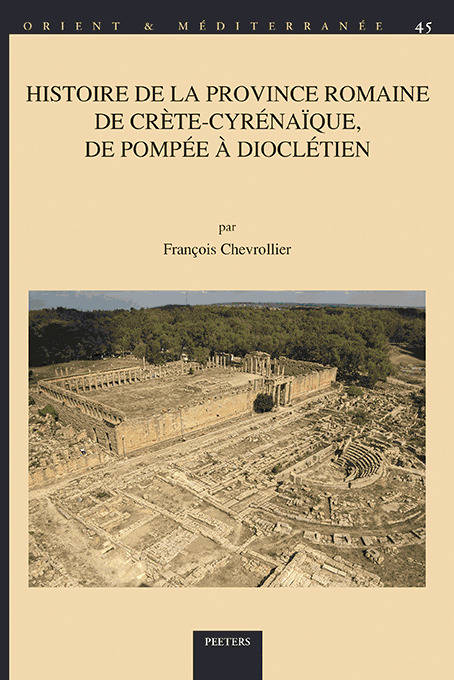
Histoire de la province romaine de Crète-Cyrénaïque, de Pompée à Dioclétien
F. Chevrollier
€ 68,00
+ 136 punten
Omschrijving
Alors que les recherches sur la Crète romaine connaissent depuis une vingtaine d’années un important renouveau, que les fouilles conduites jusqu’à peu en Cyrénaïque fournissent de plus en plus d’informations sur la période du Haut-Empire, et que le corpus des Inscriptions of Roman Cyrenaica est récemment paru, le cadre administratif dans lequel vivaient ces deux régions de la pars Graeca entre l’époque de Pompée et la Tétrarchie a paradoxalement peu suscité l’attention des historiens, en raison de leur caractère périphérique et de leur marginalité supposée. La province de Crète-Cyrénaïque est ici étudiée du point de vue de son histoire administrative, depuis sa formation dans le courant du Ier siècle av. J.-C. jusqu’à sa séparation après les réformes de Dioclétien. L’organisation interne de la province, le statut des poleis, entre cités libres et coloniae, ainsi que les enjeux militaires d’un espace à la fois maritime et désertique, sont décrits. Est également établie la prosopographie complète des magistrats romains (proconsuls, légats, questeurs, procurateurs) dont les carrières sont analysées. Cette synthèse sur l’une des rares doubles provinces de l’Empire a pour objectif de montrer ce que les sources crétoises et cyrénéennes s’apportent mutuellement, de répondre à certains questionnements relatifs à la gestion des prouinciae romaines et de contribuer plus généralement à l’histoire de l’Orient hellénophone à l’époque impériale.
Over the last twenty years, major advances have been made in research on Roman Crete, while excavations in Cyrenaica have provided new information on the Early Imperial period. More recently, the corpus of the Inscriptions of Roman Cyrenaica has been published. However, the administrative framework in which these two regions of the pars Graeca flourished between Pompey and the Tetrarchy has paradoxically received little attention from historians, due to their peripheral location and supposed marginality. The administrative evolution of the province of Crete and Cyrene, from its formation during the1st century BCE to its separation after the reforms of Diocletian, is first studied. The internal organization of the province, the status of the poleis – between free cities and coloniae – as well as the challenges of defending an area that was both maritime and on the edge of the desert, are described. A complete prosopography of the Roman officials (proconsuls, legates, quaestors, procurators) as well as an analysis of their careers are also included. This synthesis of one of the Empire’s few dual provinces aims to demonstrate what Cretan and Cyrenaican sources contribute to each other, to answer certain questions on the management of the Roman prouinciae, and to offer a more general contribution to the history of the Greek East during the Imperial period.
Over the last twenty years, major advances have been made in research on Roman Crete, while excavations in Cyrenaica have provided new information on the Early Imperial period. More recently, the corpus of the Inscriptions of Roman Cyrenaica has been published. However, the administrative framework in which these two regions of the pars Graeca flourished between Pompey and the Tetrarchy has paradoxically received little attention from historians, due to their peripheral location and supposed marginality. The administrative evolution of the province of Crete and Cyrene, from its formation during the1st century BCE to its separation after the reforms of Diocletian, is first studied. The internal organization of the province, the status of the poleis – between free cities and coloniae – as well as the challenges of defending an area that was both maritime and on the edge of the desert, are described. A complete prosopography of the Roman officials (proconsuls, legates, quaestors, procurators) as well as an analysis of their careers are also included. This synthesis of one of the Empire’s few dual provinces aims to demonstrate what Cretan and Cyrenaican sources contribute to each other, to answer certain questions on the management of the Roman prouinciae, and to offer a more general contribution to the history of the Greek East during the Imperial period.
Specificaties
Betrokkenen
- Auteur(s):
- Uitgeverij:
Inhoud
- Aantal bladzijden:
- 580
- Taal:
- Frans
- Reeks:
- Reeksnummer:
- nr. 45
Eigenschappen
- Productcode (EAN):
- 9789042953246
- Verschijningsdatum:
- 14/08/2024
- Uitvoering:
- Paperback
- Formaat:
- Trade paperback (VS)
- Afmetingen:
- 16 cm x 24 cm
- Gewicht:
- 1097 kg


Alleen bij Standaard Boekhandel
+ 136 punten op je klantenkaart van Standaard Boekhandel
Cadeau

AANGERADEN


Beoordelingen
We publiceren alleen reviews die voldoen aan de voorwaarden voor reviews. Bekijk onze voorwaarden voor reviews.