


- Afhalen na 1 uur in een winkel met voorraad
- Gratis thuislevering in België vanaf € 30
- Ruim aanbod met 7 miljoen producten
- Afhalen na 1 uur in een winkel met voorraad
- Gratis thuislevering in België vanaf € 30
- Ruim aanbod met 7 miljoen producten





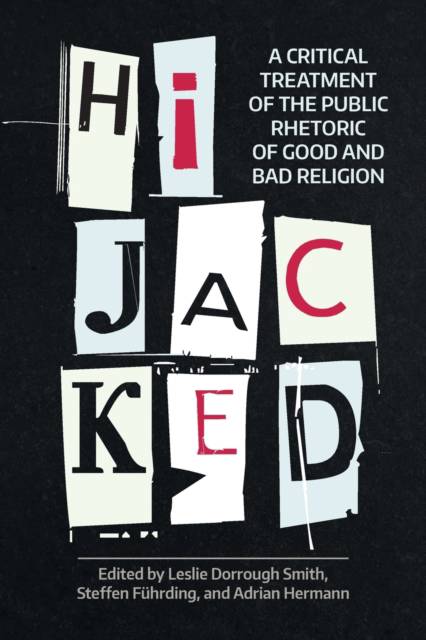
Hijacked
A Critical Treatment of the Public Rhetoric of Good and Bad Religion
€ 51,95
+ 103 punten
Omschrijving
Whether intentionally or not much of our public discourse on religion involves a subtle, but incredibly powerful, distinction between "good" and "bad" religion. The implications of these labeling practices are far-reaching, indeed, for such judgments manifest in terms such as "fundamentalist," "radical," and "extremist," words that are often the gauge by which governments worldwide determine everything from the parameters of religious freedom, to what constitutes an act of terrorism, to whether certain groups receive legal protections. Conversely, it is often surprising to see how different groups that may otherwise better typify the extremist profile remain unscathed by punitive governmental or social measures because of their pre-existing social popularity or perceived normalcy. This volume argues that public inquiry into religion is guided by unspoken value judgments, which are themselves the products of rarely-discussed political interests. This volume opens with a critical introduction which lays out the nature of the issue and its practical ramifications. The following chapter demonstrates how one can analytically critique the good/bad religion rhetoric as it appears in scholarship today. Hijacked is then organized around four different social institutions through which these value judgments have been established and deployed - namely, within politics, the media, the university, and the classroom. After a short introduction by the editors, each section begins with a chapter that highlights a particular case study or example of this good/bad distinction at work. The three to four responses that follow extrapolate from some element of the exemplar to provide an analysis on how such rhetoric operates in that particular social realm.
Specificaties
Betrokkenen
- Uitgeverij:
Inhoud
- Aantal bladzijden:
- 224
- Taal:
- Engels
- Reeks:
Eigenschappen
- Productcode (EAN):
- 9781781797273
- Verschijningsdatum:
- 1/07/2020
- Uitvoering:
- Paperback
- Formaat:
- Trade paperback (VS)
- Afmetingen:
- 156 mm x 234 mm
- Gewicht:
- 331 g

Alleen bij Standaard Boekhandel
+ 103 punten op je klantenkaart van Standaard Boekhandel
Cadeau

AANGERADEN


Beoordelingen
We publiceren alleen reviews die voldoen aan de voorwaarden voor reviews. Bekijk onze voorwaarden voor reviews.