


- Afhalen na 1 uur in een winkel met voorraad
- Gratis thuislevering in België vanaf € 30
- Ruim aanbod met 7 miljoen producten
- Afhalen na 1 uur in een winkel met voorraad
- Gratis thuislevering in België vanaf € 30
- Ruim aanbod met 7 miljoen producten





€ 57,95
+ 115 punten
Eenvoudig bestellen
Veilig betalen


Gratis thuislevering vanaf € 30 (via bpost)
Gratis levering in je Standaard Boekhandel
Omschrijving
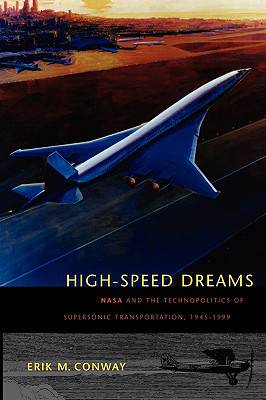
In High-Speed Dreams, Erik M. Conway constructs an insightful history that focuses primarily on the political and commercial factors responsible for the rise and fall of American supersonic transport research programs. Conway charts commercial supersonic research efforts through the changing relationships between international and domestic politicians, military/NASA contractors, private investors, and environmentalists. He documents post-World War II efforts at the National Advisory Committee on Aeronautics and the Defense Department to generate supersonic flight technologies, the attempts to commercialize these technologies by Britain and the United States during the 1950s and 1960s, environmental campaigns against SST technology in the 1970s, and subsequent attempts to revitalize supersonic technology at the end of the century. High-Speed Dreams is a sophisticated study of politics, economics, nationalism, and the global pursuit of progress. Historians, along with participants in current aerospace research programs, will gain valuable perspective on the interaction of politics and technology.
Specificaties
Betrokkenen
- Auteur(s):
- Uitgeverij:
Inhoud
- Aantal bladzijden:
- 392
- Taal:
- Engels
- Reeks:
Eigenschappen
- Productcode (EAN):
- 9780801890819
- Verschijningsdatum:
- 15/08/2008
- Uitvoering:
- Paperback
- Formaat:
- Trade paperback (VS)
- Afmetingen:
- 152 mm x 229 mm
- Gewicht:
- 571 g


Alleen bij Standaard Boekhandel
+ 115 punten op je klantenkaart van Standaard Boekhandel
CADEAU

AANGERADEN


Beoordelingen
We publiceren alleen reviews die voldoen aan de voorwaarden voor reviews. Bekijk onze voorwaarden voor reviews.